
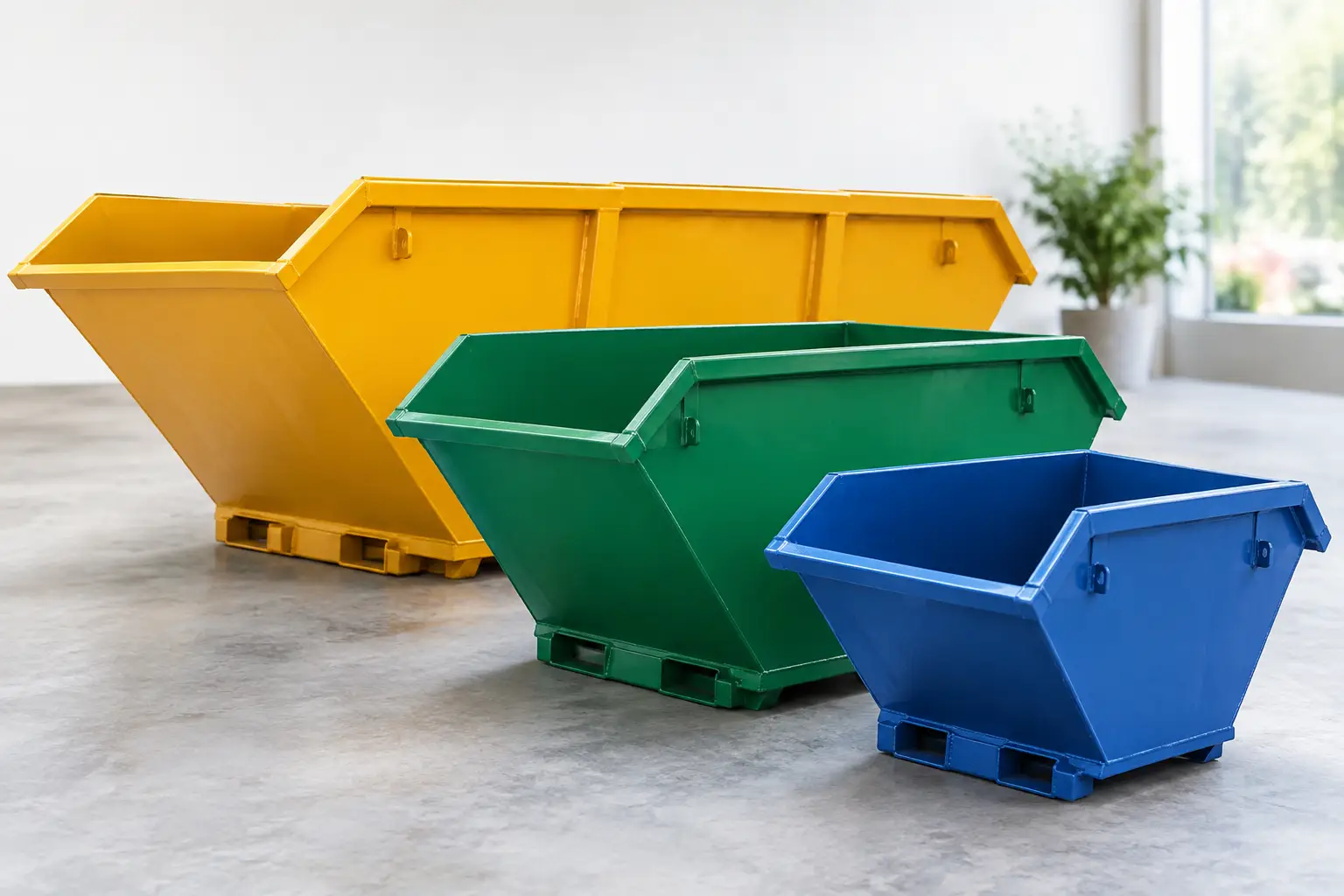
A skip that looks too large on the drive can feel very different once old cupboards, carpet, timber and garden waste start going in. Choosing too small often means ordering a second skip or making an extra waste run. Choosing too large can mean paying for space you never use. This guide puts skip sizes compared side by side, so you can book with more confidence for a job in Worthing or the surrounding Sussex area.
Skip capacity is measured in cubic yards. That sounds technical, but the practical question is simple: how much waste do you have, and what type of waste is it? A few bulky items can fill a skip faster than expected, while soil, rubble and hardcore can become too heavy for a larger skip even when there is room left at the top.
Skip sizes compared: 2, 4, 6 and 8 yards
The right size depends on the scale of the job, the materials being removed and the space available for delivery. Dimensions vary slightly between skip suppliers, but the yardage is the useful guide when comparing capacity.
2-yard skip – for small, contained clear-outs
A 2-yard skip is a compact choice for a small amount of household or garden waste. It is often suitable for clearing a shed, a cupboard-filled room, a small flower bed or a few bags of mixed rubbish after a tidy-up.
Think of it as a practical option when you have more than a car boot full but not enough waste to justify a larger container. It can also suit small bathroom refits where the waste is mainly packaging, old fittings and light materials.
The trade-off is that bulky items use its space quickly. A dismantled wardrobe, sections of fencing or several old doors can take up much of the skip before you have added the smaller waste. If you are clearing more than one area of the property, a 4-yard skip is usually the safer choice.
4-yard skip – a popular choice for home projects
A 4-yard skip is often the sensible middle ground for domestic jobs. It suits a kitchen or bathroom refresh, a garage clearance, a modest garden overhaul, or the removal of unwanted furniture and general household rubbish.
For many homeowners, this size provides enough room to avoid cramming or making a second booking, without taking up more drive space than necessary. It is a good fit for a weekend clear-out where you are working through old boxes, broken furniture, timber, light DIY waste and garden cuttings.
If your waste includes heavy material such as soil, clay, rubble or paving, tell the provider before booking. Heavy waste has different loading limits because a skip can reach its weight allowance long before it looks full.
6-yard skip – for renovations and bigger clearances
A 6-yard skip gives you useful extra capacity for a larger household job. It is commonly chosen for kitchen replacements, several-room decluttering, larger garden works, small building projects and landlord clearances between tenancies.
This is the size to consider when the job has a mixture of bulky and loose waste. For example, old units, flooring, plasterboard, timber, packaging and general rubbish soon add up during a renovation. A 6-yard skip leaves more room to load carefully rather than trying to force everything into a smaller container.
It can be more cost-effective to book one 6-yard skip than fill a 4-yard skip and then need another collection. That said, it is only the better value if you genuinely have the volume. For a straightforward single-room clear-out, a 4-yard skip may still be the more affordable option.
8-yard skip – for substantial domestic and light trade waste
An 8-yard skip is designed for bigger projects. It can suit a full house clearance, a significant garden transformation, a larger renovation or regular light commercial waste where the materials are not excessively dense.
It is particularly useful for landlords, property managers and contractors who need to clear a property efficiently and do not want waste building up on site. If several rooms are being stripped out, or you are disposing of lots of timber, fixtures, furniture, cardboard and general mixed waste, the additional volume can make the work far easier.
However, larger is not always better. An 8-yard skip needs adequate access and a suitable place to sit. It is also not normally the right answer for a skip full of soil, concrete or hardcore. Dense materials need a smaller dedicated option so the load remains safe and legal to transport.
How to estimate the size you need
Start by looking at the waste in piles, not as individual items. A garage can contain a surprising amount once shelves, paint tins, old tools, boxes, bikes and broken furniture are brought outside. A garden project can grow quickly once roots, branches, soil and old fencing are added to the pile.
As a rough guide, choose a 2-yard skip for a small clear-out, a 4-yard skip for most single-room projects and garage clearances, a 6-yard skip for renovations or multi-room jobs, and an 8-yard skip for full property clearances or substantial mixed waste. If you are between two sizes, the larger choice is often less stressful, provided it suits the waste type and available space.
Try to separate waste that may need a different disposal route. Mattresses, sofas, fridges, tyres, paint, electrical items and hazardous materials cannot always go into a standard mixed-waste skip. Flag these items when you book so there are no surprises on collection day.
Space, access and where the skip will go
Before deciding on a size, measure the delivery area. A clear driveway is usually the simplest location, but it needs enough width for the lorry to manoeuvre and enough length for the skip itself. Move vehicles, bins and low garden furniture out of the way before delivery.
If the skip needs to go on the road, you may need a permit from the local council. The requirements can depend on the exact location and how long the skip will be there. Booking early gives time to sort this out and avoids holding up the work.
Also consider access inside the property. If waste has to be carried down narrow stairs, through a flat or along a long path, a skip may not be the easiest option for every item. In these cases, rubbish collection or a property clearance service can save a great deal of lifting and loading.
Make the most of the skip you book
Good loading makes a noticeable difference. Break down boxes, dismantle furniture where possible and place flat items along the sides. Put heavier items at the bottom and use smaller waste to fill gaps. This keeps the load stable and helps you use the full capacity without going over the top edge.
Never overfill a skip. Waste sticking above the rim can be unsafe during transport, and the driver may be unable to collect it until the excess has been removed. Keep the load level, especially if rain is expected, as wet soil and garden waste can become far heavier.
If you are unsure whether your project is likely to produce two, four or eight yards of waste, it is worth describing the job clearly when making an enquiry. Mention the rooms being cleared, the larger items involved and whether there is soil, rubble or plasterboard. A local provider such as D J Recycling can then point you towards the most practical option rather than leaving you to guess.
When a skip is not the best answer
A skip is excellent when you can load waste as you work and have a safe place for it. But it is not essential for every clearance. If you only have a sofa, mattress, white goods or a handful of bulky items, a collection may be quicker and more economical. Skip bags can also work well for smaller amounts of waste where driveway space is limited.
For a house clearance, particularly after a move, tenancy change or bereavement, a full clearance service can remove the physical work of sorting, carrying and loading. The best disposal method is the one that suits the job, not simply the biggest container available.
Choose a skip size based on the waste you can see, allow a little room for the waste you have not uncovered yet, and make sure the delivery point works before booking. That small amount of planning keeps the clear-out moving and leaves you with a property that is ready for whatever comes next.