

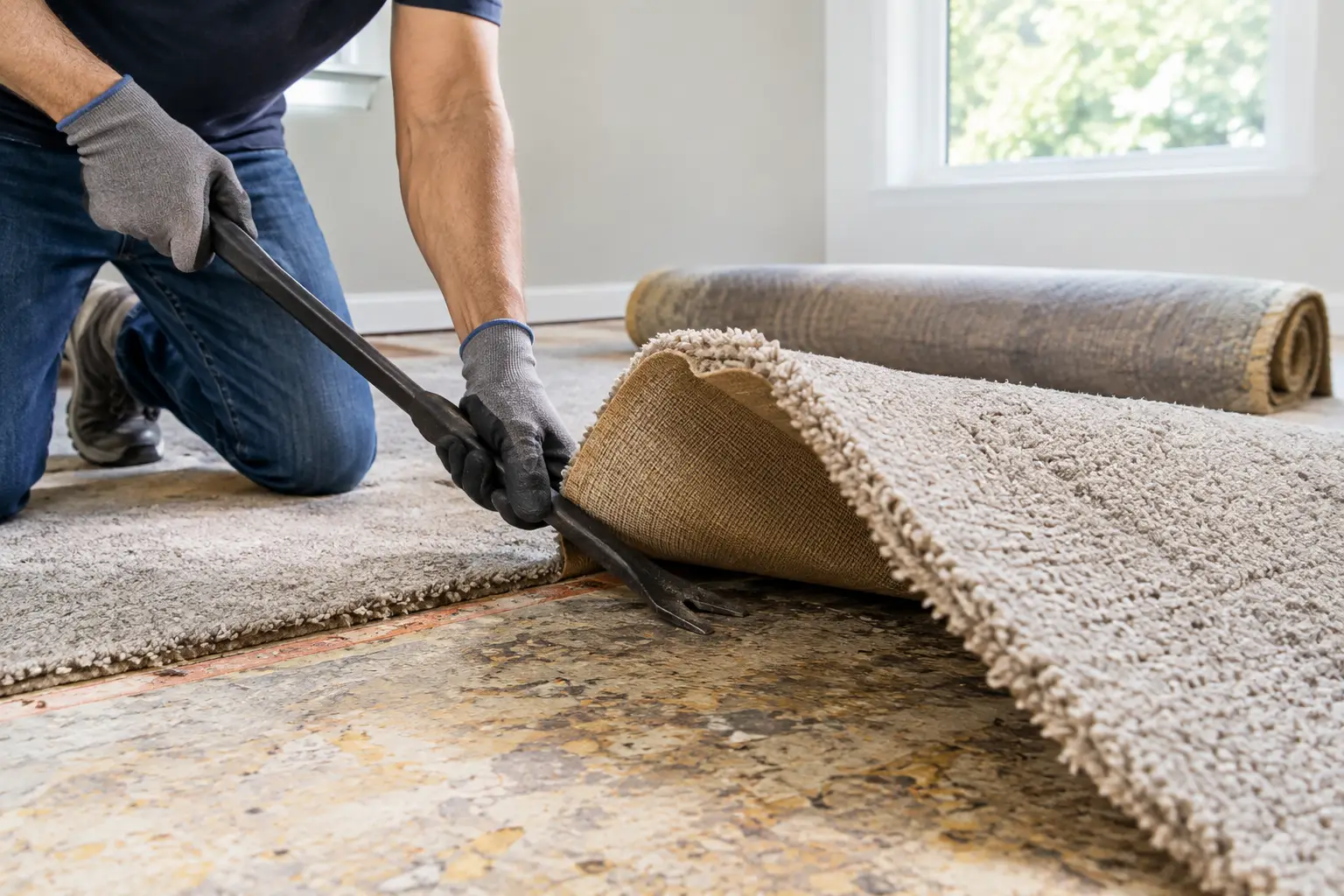
A worn carpet can make an otherwise tidy room feel dated, and it is often only when you lift a corner that you see how much dust, debris and old underlay have built up underneath. Knowing how to remove old carpet properly makes the job quicker, protects the floor below and leaves you with waste that is far easier to manage.
For a small bedroom, this can be a straightforward afternoon job. For a whole house, a rental property or a room full of heavy furniture, it pays to plan the removal and disposal before you start. Carpet is awkward rather than technically difficult: it is bulky, can be surprisingly heavy once rolled up, and usually comes with underlay, gripper rods and strips of edging to deal with too.
Before You Start Removing Old Carpet
Clear as much furniture as possible from the room. Smaller items can go into another room, while heavier wardrobes, beds and sofas may need help to move safely. Do not try to drag heavy furniture over a carpet you have partly lifted. It can catch on gripper rods and create a trip hazard.
Open windows if you can, particularly with older carpet that may release dust as it is pulled up. Wear work gloves, long sleeves and sturdy footwear. The gripper rods around the edge of a room contain sharp pins that point upwards, and they can still catch you even after the carpet has been removed.
You will usually need four basic items:
- A pair of heavy-duty gloves
- A sharp utility knife with spare blades
- Pliers or a flat pry bar
- A hammer and a scraper for stubborn fittings or adhesive
If the carpet has been down for many years, consider wearing a dust mask as well. This is especially sensible in a property that has been empty, where dust and loose fibres may have settled undisturbed.
Before cutting anything, check what is below the carpet. In many homes, you may find floorboards, chipboard flooring, concrete or old vinyl. If you hope to keep what is underneath, work carefully and avoid forcing tools into the surface.
How to Remove Old Carpet Step by Step
Start in one corner of the room, ideally near a doorway. Grip the carpet with pliers and pull it up from the gripper rod. You may need to use a flat pry bar to lift the first edge, but take your time. Once a section is free, the carpet should pull back by hand.
Pull the carpet away from the wall in a steady motion rather than yanking it upwards. This reduces the chance of tearing the material into unmanageable sections or damaging skirting boards. If it is fixed around pipes, door frames or built-in furniture, cut around these areas carefully with a utility knife.
As you lift, fold the carpet back on itself. A full roll can be too large and heavy to carry through a hallway or downstairs, so cut it into strips as you go. Sections around one metre wide are usually manageable for one person, though a thick carpet may still need two people to move it safely.
Roll each strip tightly and secure it with tape, string or spare carpet offcuts. This keeps fibres contained, makes loading easier and stops loose rolls unfurling in the garden, on the drive or in a skip.
Lift the Underlay Separately
Underlay often comes up much more easily than carpet. Foam underlay may be stapled or glued in places, while felt or rubber underlay can be heavier and more stubborn. Pull it up in sections, then roll or bag it separately from the carpet where possible.
Take care with crumb rubber underlay. Older material can break apart as it is lifted, leaving loose pieces across the floor. Sweep these up before moving on, as they can get trapped under shoes and carried through the property.
Remove Gripper Rods and Door Bars With Care
Gripper rods are the narrow wooden strips fixed around the edge of a carpeted room. They are normally nailed or glued to the floor and have sharp angled pins along their top. Use a pry bar and hammer to lift them a little at a time, working along the length rather than levering hard in one spot.
If you have timber floorboards underneath and want to preserve them, place a wide piece of wood or a thick scraper beneath the pry bar to spread the pressure. This helps prevent dents and reduces the chance of splitting a board. On concrete, gripper rods may leave nail fragments or adhesive behind, which can normally be scraped away once the room is clear.
Metal door bars and carpet thresholds should also be removed if you are replacing the flooring. Unscrew them where possible. If screws are rusted or damaged, do not force them and risk damaging the doorway. A careful removal now will make fitting the next floor covering much simpler.
What to Do With Old Carpet and Underlay
The removal itself is only half the job. Old carpet takes up a lot of space quickly, and most household wheelie bins are not suitable for it. Some local household waste sites accept carpet, but rules, charges and opening arrangements can vary. You will also need a suitable vehicle and enough time to make the trip.
For one small room, a pre-booked bulky waste collection or a local waste collection service may be the easiest route. It saves you cutting rolls down to fit into a car and avoids leaving material stored outside while you wait.
If you are stripping several rooms, clearing a flat, or combining the job with other renovation waste, a skip can be more practical. A smaller skip may suit a single room alongside underlay and a few bits of packaging. For larger refits, a bigger skip gives you room for carpet, old flooring, timber, fixtures and general household waste in one place.
It depends on your access as much as the amount of waste. If there is no room on your drive or you cannot place a skip conveniently, a skip bag, grab service or rubbish collection may be a better fit. A collection is often particularly useful for upstairs flats, narrow streets and properties where moving a heavy carpet roll to the kerb is difficult.
Do not assume every waste provider handles carpet in exactly the same way. Tell them that you have carpet, underlay, gripper rods and any other materials when booking. This helps them recommend the right option, explain what can be loaded together and avoid surprises on collection day.
Common Problems When Lifting Carpet
The most common mistake is trying to remove too much in one piece. A large living-room carpet may look easy to roll, but it quickly becomes too heavy to control, especially on stairs. Cutting it into strips is usually faster overall and much safer.
Another issue is adhesive. Carpet itself is commonly held by gripper rods, but underlay or old vinyl beneath it may be glued down. Avoid using harsh chemicals before you know what the subfloor is made from. A floor scraper and steady pressure are often enough for loose residue; tougher adhesive may need a product chosen specifically for timber, concrete or the flooring you plan to install next.
Watch for damp patches, staining or a musty smell once the carpet is up. These can point to a leak, poor ventilation or a pet-related issue that needs sorting before new flooring goes down. Covering it immediately can trap the problem and lead to more expense later.
If you uncover very old tiles, black adhesive or material you cannot identify, stop work rather than sanding, drilling or breaking it up. Older building materials can require specialist advice, particularly in homes that have not been refurbished for decades.
Make the Room Ready for Its Next Use
Once the carpet, underlay and fittings are out, vacuum the floor thoroughly, including the edges by the skirting. Remove staples, nails and loose debris, then check for raised boards, cracks or uneven areas. This is the point to make repairs, not after a new carpet, laminate or vinyl floor has been fitted.
Keep the room clear until the waste has been removed. It is tempting to stack rolls in a hallway or garage, but that creates an obstruction and can turn a one-day job into a lingering nuisance. For homeowners, landlords and local contractors across Worthing and Sussex, D J Recycling can help with a suitable skip, bag or collection service when the carpet is ready to go.
A clean, empty floor gives you a proper view of the room and a fresh starting point for whatever comes next. Plan the disposal at the same time as the removal, work in manageable sections, and the old carpet will be out of the way before it becomes another job on the list.
