
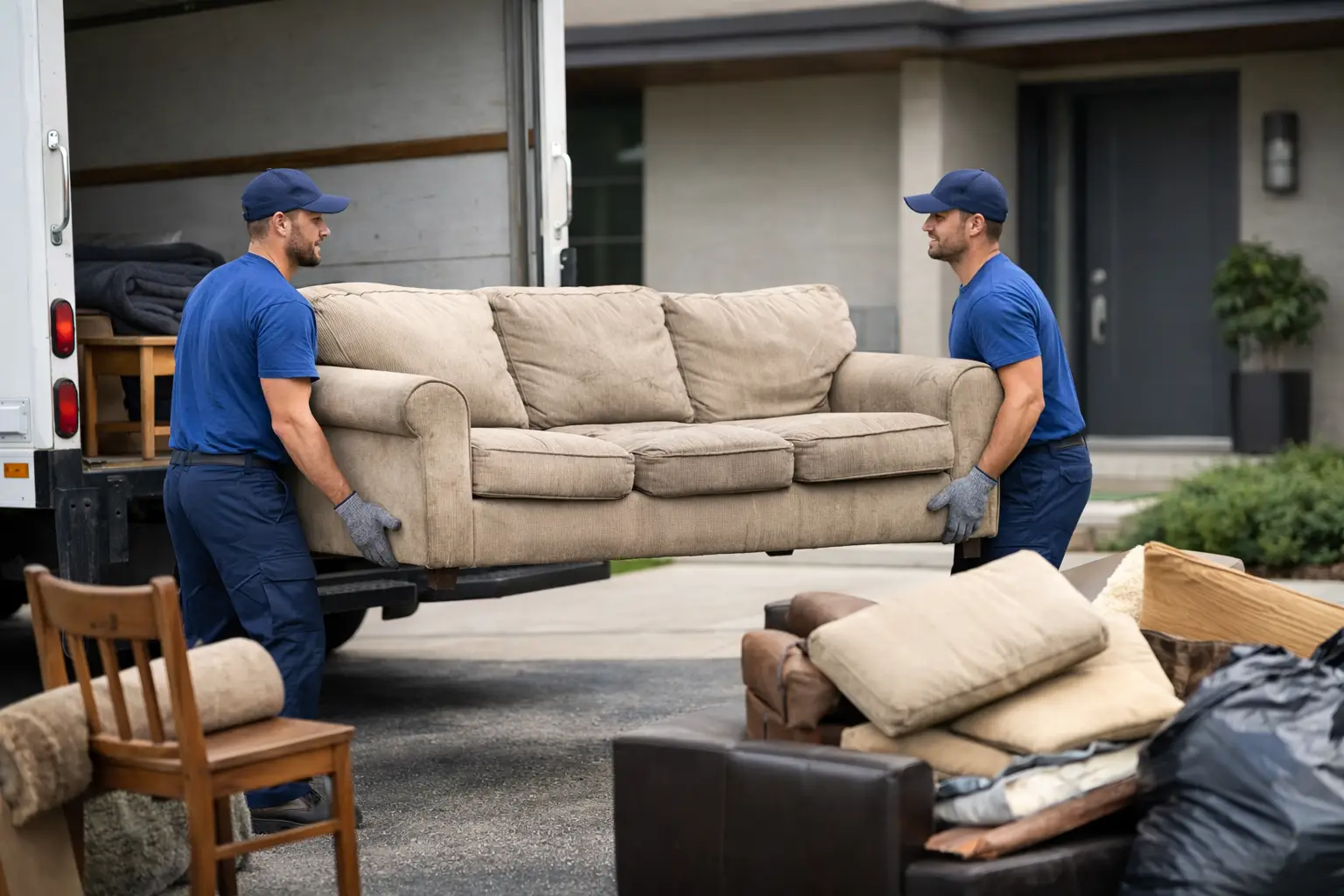
That old sofa usually becomes a problem at the worst possible time – when you’re moving house, clearing a rental, replacing furniture or trying to get a property ready for new tenants. If you’re wondering how to dispose old sofa without wasting a weekend or risking a fine, the good news is that you have a few straightforward options. The right one depends on the sofa’s condition, how quickly it needs to go, and whether you can get it out of the house yourself.
A lot of people assume a sofa can just be left outside and taken away. In reality, that can count as fly-tipping if it is dumped on the pavement, by bins or on private land without permission. Sofas are bulky, awkward to move and not always accepted in standard household waste collections, so it makes sense to plan the job properly from the start.
How to dispose old sofa without hassle
The easiest route is not always the cheapest on paper, but it is often the cheapest once you factor in your time, transport and the risk of getting it wrong. If the sofa is still clean, safe and usable, rehoming it is worth trying first. If it is damaged, stained, sagging or simply beyond use, a proper collection service or bulky waste disposal option is usually the better choice.
Before you arrange anything, check whether the sofa has to come down stairs, through tight hallways or out of an upper-floor flat. That matters because some disposal options expect the item to be left outside already, while others will remove it from inside the property. If you are dealing with a house clearance, end-of-tenancy clean-up or multiple bulky items at once, it often makes more sense to book a wider waste removal service rather than handling the sofa on its own.
If your sofa is still in usable condition
A sofa that is structurally sound, reasonably clean and compliant for resale or donation may still have life left in it. In that case, giving it away or arranging a charity collection can be a sensible option. This works best when the cushions are intact, the frame is solid and there are no strong odours, tears or obvious damage.
The trade-off is time. Donations and giveaways can take longer than people expect, and collection slots are not always immediate. Some organisations will also refuse upholstered furniture if it does not meet fire safety labelling requirements. If you need the sofa gone by tomorrow, waiting for the right taker may not be realistic.
If the sofa is damaged or worn out
Once a sofa is ripped, heavily stained, broken or infested, reuse is usually off the table. At that point, the focus shifts to legal disposal and easy collection. This is where many homeowners, landlords and tenants decide that paying for removal is worth it. You avoid hiring a van, lifting a heavy item and trying to work out where it can actually be accepted.
For larger clear-outs, a skip can work well if you have space on a drive and other waste to load as well. For one sofa, or where there is no room for a skip, a man-and-van style rubbish collection is usually the simpler answer. It is especially useful in built-up areas, flats and rental properties where access is tighter and speed matters.
Your main sofa disposal options
Council bulky waste collection is often the first thing people check. It can be a reasonable option if price is the main concern and you are happy to work around their timetable. The downside is that waiting times vary, collections may only happen on certain days, and you may have to move the sofa outside yourself.
Taking it to a household waste site is another option, but only if you have suitable transport and help for lifting. Not every site accepts every type of upholstered furniture in the same way, and some have booking systems or limits. If you arrive with the wrong vehicle, the wrong paperwork or an item they will not take, it quickly becomes more effort than expected.
Private waste collection is often the most convenient route. You book the job, agree the price, and the item is removed with much less back-and-forth. For local customers in Worthing and surrounding Sussex areas, that kind of service is usually chosen for one reason – it gets the problem sorted quickly.
Skip or collection – which is better?
If you are stripping out a room, replacing flooring and throwing away other furniture at the same time, a skip may give better value overall. You can load multiple waste types in one go and keep working at your own pace. It suits renovations, garage clear-outs and larger household jobs.
If the sofa is the main issue, a collection service is normally more practical. You do not need to fill a whole skip just to get rid of one bulky item. It also helps when the property has limited parking, no driveway or restrictions on skip placement. D J Recycling offers both options, which matters because the best disposal method depends on the job rather than a one-size-fits-all answer.
What to check before you book sofa removal
Start with access. Measure doorways if the sofa is oversized, especially with corner sofas, recliners and sofa beds. A quick check can prevent delays on collection day.
Next, be clear about the condition. If the sofa is wet, contaminated or has signs of bed bugs, say so upfront. Reputable waste carriers need accurate information so they can handle the collection correctly. Hiding the condition does not save money – it usually causes problems.
It also helps to mention whether there are stairs, narrow access points or permit-controlled parking nearby. These details affect how long the job takes and what vehicle or labour is needed. A straightforward ground-floor collection is different from removing a heavy three-seater from a second-floor flat with no lift.
Why legal disposal matters
Most people are not trying to cut corners. They just want the sofa gone. The risk comes when someone offers a cheap cash collection and then disposes of it illegally. If your waste is fly-tipped and traced back to you, you could still face questions or penalties.
That is why it pays to use a legitimate waste service rather than handing it over to the first person who responds to an advert. Proper disposal is not just about convenience. It protects you from hassle later.
How much does it cost to dispose of an old sofa?
There is no single fixed price because it depends on the size of the sofa, your location, access to the property and whether it is a standalone item or part of a bigger clearance. A compact two-seater on a ground floor is one thing. A bulky sofa bed from an upstairs flat is another.
Council collections may be cheaper, but the lower price can come with longer wait times and stricter collection rules. Private removal often costs more than the cheapest route, but for many customers the value is in speed, labour and simplicity. If you need it gone quickly before new furniture arrives, before a tenancy ends or before a property goes on the market, convenience matters.
When comparing quotes, check what is actually included. Does the price cover labour? Is the sofa collected from inside or only from outside? Are there extra charges for stairs or additional items? Clear pricing matters because nobody wants surprises after booking.
The quickest answer for most households
If the sofa cannot be reused and you want it gone without delays, booking a local bulky waste or sofa collection service is usually the most practical answer. It removes the need to borrow a van, find help, queue at a waste site or wait around for uncertain collection windows. For landlords, property managers and homeowners dealing with time-sensitive jobs, that reliability is often worth more than shaving a few pounds off the cost.
There are situations where a skip is the right call and others where a single-item collection makes more sense. That is the part people often miss. The best option is the one that fits the amount of waste, the access at the property and how quickly you need the space cleared.
A sofa takes up more room in your house than it does in your plans, so once you know how to dispose old sofa properly, it is usually best not to overthink it – choose the option that gets it removed safely, legally and without dragging the job out for another week.