

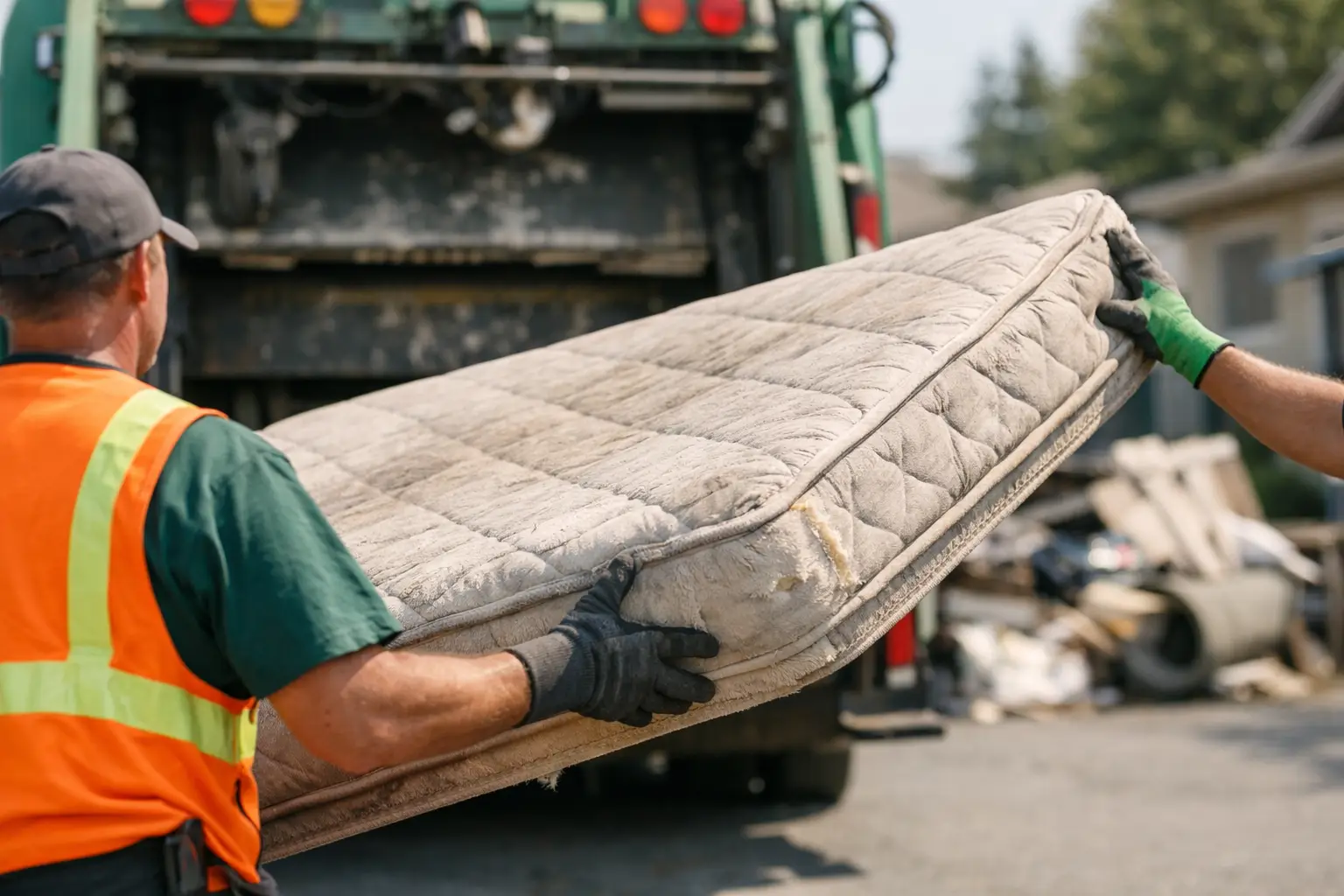
That old mattress usually becomes a problem at the worst possible time – when you are moving house, clearing a rental, replacing furniture or trying to finish a bedroom refresh before the weekend. If you are wondering how to dispose of an old mattress without hassle, the main thing is to choose an option that is legal, practical and worth the cost for your situation.
A mattress is not the sort of item you can leave next to a wheelie bin and hope for the best. It is bulky, awkward to carry and often not accepted with normal household waste. Some local tips will take them, some councils offer bulky waste collection, and in many cases a dedicated rubbish removal service is the quickest route. The right choice depends on the condition of the mattress, how fast it needs to go, and whether you have transport and help to move it.
How to dispose of an old mattress without causing a bigger job
The first question is whether the mattress can be reused or whether it needs to be disposed of as waste. If it is clean, dry and still in decent condition, reuse is worth considering. If it is stained, damaged, heavily worn, or has been left in a damp garage or loft, disposal is usually the sensible option.
Mattresses are difficult because they take up space and contain mixed materials such as foam, springs, fabric and fillings. That makes them harder to handle than standard household rubbish. It also means fly-tipping is taken seriously. Leaving one on the roadside, near communal bins or beside a recycling point can lead to complaints and, in some cases, fines.
If you are already dealing with more than one bulky item, it often makes sense to deal with everything at the same time. A mattress collection on its own may solve the immediate issue, but if you also have an old bed frame, broken wardrobe, bags of waste or general house clearance items, combining the job can save time and money.
Your main mattress disposal options
Council bulky waste collection
Many councils offer a bulky waste collection service for items like mattresses, sofas and white goods. This can be a reasonable option if you are not in a rush and the booking dates suit you. The downside is that waiting times vary, collection rules can be strict, and you may need to move the mattress to a specific collection point outside the property.
That is fine if access is easy and you can handle the lifting. It is less useful if the mattress is upstairs, the property is a flat, or you are managing a clearance on behalf of a tenant or relative.
Household waste recycling centre
If you have a suitable vehicle and can lift the mattress safely, taking it to a household waste recycling centre can work well. Before setting off, check the site rules. Some tips accept mattresses from households but may have limits, booking requirements or separate charges for certain bulky items.
This option can be cost-effective, but it is not always convenient. A king-size mattress does not fit in every car, and tying one to a roof rack is rarely as simple as people expect. You also need to factor in your time, fuel and the effort involved.
Retailer take-back service
If you are buying a new mattress, the retailer may offer to take away the old one. This is one of the easiest solutions because it removes the need to arrange a separate collection. The catch is that it usually has to be booked in advance, there is often an extra fee, and the old mattress may need to be ready at the door on delivery day.
For a straightforward replacement, it is a good option. For a property clearance or urgent removal, it may not be enough on its own.
Professional rubbish removal
For most people, this is the simplest route. A waste removal company can collect the mattress directly, load it for you and dispose of it properly. This is especially useful when access is awkward, the mattress is heavy, or you need a quick turnaround.
It also gives you more flexibility. If there are other items to clear at the same time, you can often have them removed in one visit rather than booking several different services. For homeowners, landlords and property managers, that convenience matters.
When a skip is not the best choice
People often assume a skip is the answer for every waste problem, but mattresses are one of those items where it depends. If you are doing a full renovation or large clear-out and already have a skip for mixed waste, adding a mattress may be possible depending on the skip type and what else is going in. But for one mattress on its own, a skip is usually more than you need.
There is also the issue of space. Not every property in Worthing or the surrounding area has room on the drive for a skip, and putting one on the road may require a permit. If access is tight or the job is small, direct collection is often the more practical choice.
That is where a local service with flexible options can help. If you only have a few bulky items, you do not necessarily need to pay for a whole skip when a collection will do the job faster.
Can a mattress be recycled?
In some cases, yes. Mattresses can be broken down into parts such as metal springs, foam and textiles, but whether that happens depends on the disposal route used and the facilities available. From a customer point of view, the key thing is not to assume that putting a mattress near a recycling bank means it will be recycled. It needs to go through the right channel.
If recycling is important to you, ask the collector or disposal site how mattresses are handled. A reputable waste company should be able to explain that your item is being taken away and managed properly, rather than dumped with general rubbish.
What to do before collection or disposal
A little preparation makes the job easier. Strip off all bedding, mattress protectors and covers first. If the mattress is wet, let it dry if possible before moving it, as this can reduce smell and make handling easier. If it has signs of mould or pest issues, mention that when arranging collection so the job can be handled appropriately.
Measure the mattress if access is tight. This sounds obvious, but stairwells, narrow hallways and shared entrances cause more delays than people expect. If you are arranging removal from a rented property, make sure the mattress belongs to the tenant or landlord and that nobody is expecting to keep it.
If you live in a flat or have limited access, explain that upfront. A straightforward quote often depends on where the mattress is located and whether there are other items to collect.
What you should not do
The cheapest-looking option can quickly become the most expensive if it leads to problems. Do not leave a mattress by public bins, in alleyways, outside another property or at the edge of a car park. That is classed as fly-tipping, even if you meant to come back for it later.
You should also be cautious about using unlicensed waste carriers offering cash-only collection with no clear details. If your mattress is dumped illegally after collection, questions can come back to you. Using a proper local provider is not just about convenience – it protects you from the risk of waste being handled the wrong way.
Burning a mattress is also out of the question. The materials inside can produce harmful smoke, and it is not a safe or legal way to get rid of bulky household waste.
The easiest option for busy households and landlords
If time is tight, the best answer to how to dispose of an old mattress is usually the one that removes the least work from your side while still being affordable. That often means booking a collection rather than trying to transport it yourself.
For landlords between tenancies, that can keep a property turnaround on track. For homeowners replacing furniture, it saves wrestling a bulky mattress through the house and into a vehicle. For anyone clearing a garage, spare room or entire property, it is one less thing to organise.
A local firm such as D J Recycling can be a practical fit when you need a fast, straightforward collection and do not want to deal with the lifting, loading or disposal arrangements yourself. That is particularly useful if there are other waste items to clear at the same time.
The best approach is the one that matches the size of the job. A single mattress may only need a quick collection. A larger clear-out might suit a skip, a wait-and-load service or a full house clearance. Getting rid of the mattress is the priority, but choosing the right method can make the rest of the job much easier too.
If your old mattress has been sitting there for weeks because it feels awkward to deal with, that is usually the sign to keep it simple and book the option that gets it gone properly.
