

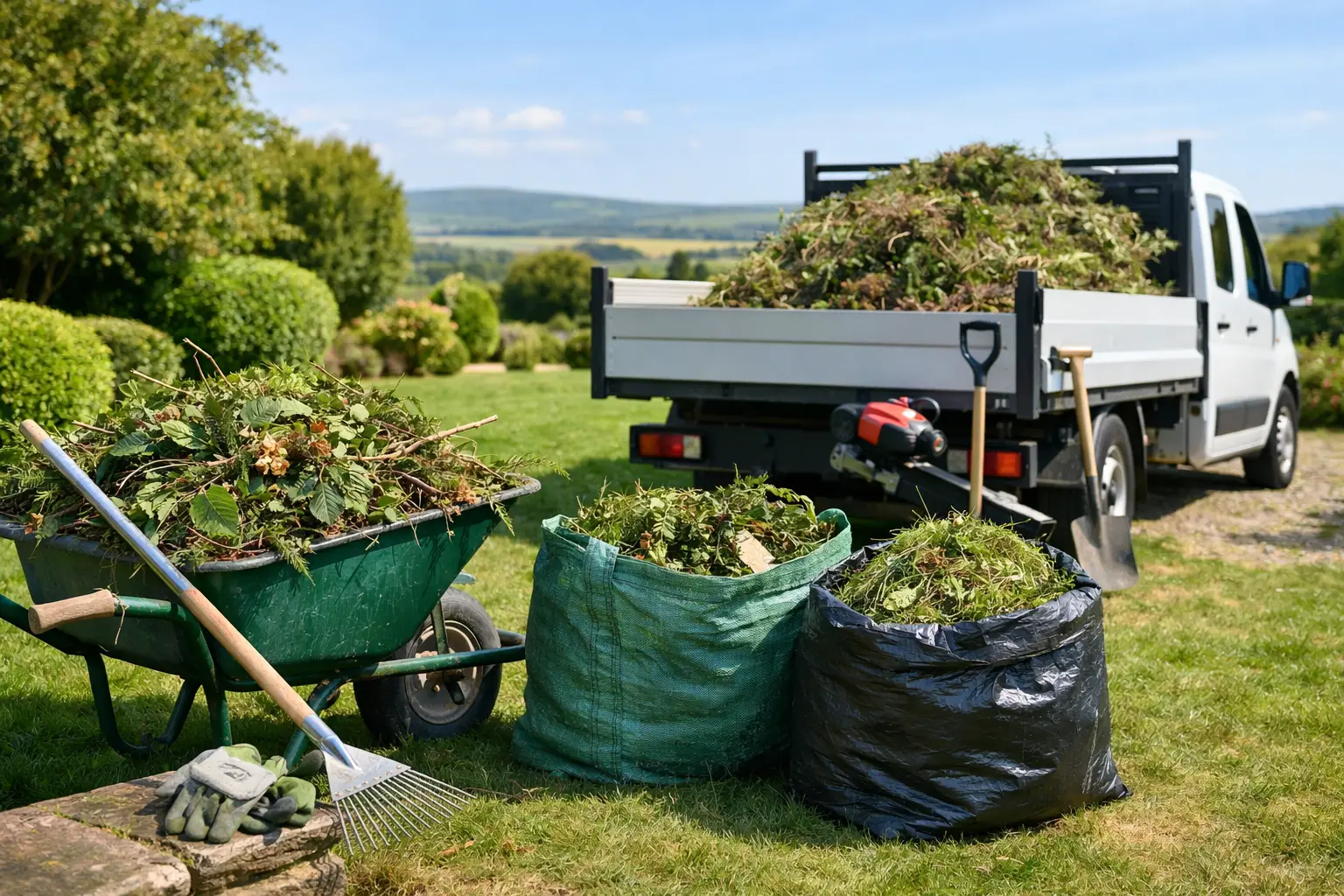
A garden clear-out can look manageable until the first pile of hedge cuttings becomes five bags, the old fence panels are stacked by the gate, and there is nowhere left to put the broken pots. This guide to garden waste removal helps you choose the simplest, most cost-effective way to clear it without repeated tip runs or a driveway full of bags.
Whether you are tidying up after a weekend of pruning, preparing a property for sale, clearing a neglected rental garden or finishing landscaping work, the right option depends on the amount of waste, the materials involved and the access to your property.
Start by sorting garden waste
Not all outdoor waste can be handled in the same way. Separating it before arranging collection makes the job quicker and helps avoid paying for a larger service than you need.
Green waste includes grass cuttings, leaves, weeds, small branches, hedge trimmings and plants. If your garden has room, some of this can be composted at home. Composting is particularly useful for smaller, regular amounts of soft green waste, although it will not solve the problem when you are cutting back mature hedges or clearing an overgrown garden.
Wood waste is a separate consideration. Untreated timber, branches, old trellis and fence panels may be accepted as general waste or recycled where possible, but painted, treated or rotten wood should not go in a home compost heap. Soil, turf, rubble and paving are heavy materials and usually need a different disposal plan from light green waste.
It also helps to keep non-garden items separate. Old garden furniture, barbeques, broken tools, plastic pots, bags of household rubbish and unwanted sheds can all be removed, but they may affect the best collection method. Never mix in paint, chemicals, fuel, gas bottles, asbestos or electrical items without checking first, as these need specialist handling.
Choose the right garden waste removal option
There is no single best way to remove garden waste. A few black bags of trimmings call for a different solution from a full garden renovation. Choosing by volume and access will save time and keep costs clear from the start.
Use your council green waste service for routine cuttings
A council garden bin can be a sensible option for households with regular, modest amounts of grass, leaves and prunings. It is convenient because collection is scheduled, and it suits ongoing garden maintenance.
The downside is capacity. A green bin will fill quickly after a major cut-back, and many schemes will not take timber, soil, turf, large branches or general rubbish. If you need the garden cleared this week rather than on the next collection date, a one-off removal service is usually more practical.
Make a tip run for small, clean loads
Taking waste to a household recycling centre can work if you have a suitable vehicle, the load is small and you have time to make the trip. It is often useful for a few bags, pots and manageable branches.
However, tip runs can become expensive in effort. Wet garden waste is heavy, loose branches take up more space than expected, and loading a car more than once is rarely the best use of a weekend. Restrictions may also apply to vans, trailers and certain materials, so check before loading up.
Book a waste collection when you want it gone
A man-and-van style rubbish removal service is ideal when the waste is already bagged or piled up and you do not want to move it yourself. It is a good fit for green waste mixed with old garden furniture, broken fencing, plant pots and other bulky items.
This option is especially useful for flats, properties with limited parking, and homes where a skip cannot be placed safely. The collection team loads the waste, leaving you with a clear space rather than a disposal job still to finish.
Hire a skip for larger clear-outs
For landscaping projects, garden renovations and substantial clearances, a skip gives you the freedom to load waste as you work. It is often the simplest choice when you have several waste types, including wood, soil, turf, paving, old sheds and general outdoor clutter.
The size matters. A smaller skip may suit a straightforward garden tidy, while a larger one is better for fencing replacement, patio removal or a heavily overgrown plot. If you are disposing of significant amounts of soil or rubble, do not assume you can fill a large skip to the top. Heavy loads have weight limits and may need a dedicated arrangement.
You will also need enough space for delivery and collection. A driveway is usually easiest. If the skip needs to go on a public road, a permit may be required, which can take time and add cost. For homes in tight Worthing streets, collection or a skip bag may be more convenient.
Consider skip bags for flexible access
Skip bags are useful when you have space to fill a bag gradually but not enough room for a metal skip. They can work well for lighter garden waste, small branches, pots and general outdoor clutter.
They are not the answer for every job. Loose soil, heavy rubble and large quantities of wet turf can make a bag impractical, and collection access for the lorry still needs to be considered. Before ordering, think about where the bag will sit and whether it can be reached easily when full.
How to prepare garden waste for collection
A little preparation can make collection faster and avoid unnecessary complications. Cut long branches down to manageable lengths where possible and place loose green waste in bags, bins or a contained pile. Do not overfill bags to the point where they split when lifted.
Keep sharp items such as broken glass, nails, wire and damaged tools clearly separate. If you are clearing a shed, check carefully for leftover chemicals, paint tins, pesticides or fuel before the removal team arrives. These should never be hidden in the middle of a general waste pile.
For a skip, load flat items first and break down fencing, timber and cardboard to use the space properly. Put heavier material at the bottom and lighter green waste on top. Do not pile waste above the sides of the skip, as it may not be safe or legal to transport.
If access is narrow, clear a route from the garden to the collection point. Move cars where necessary, keep gates unlocked and tell the provider about steps, steep paths or restricted parking in advance. This is particularly important for rear-garden clearances, where the labour involved can be very different from collecting a pile at the front of the property.
What should not go in garden waste
Garden waste is not simply anything that happens to be outside. Treated timber, old railway sleepers, artificial grass, plastic edging and garden furniture are not green waste, even though they may be part of the same project. They can still be collected, but they need to be described accurately when booking.
Soil and turf are also easy to underestimate. A small pile can weigh far more than expected, particularly after rain. Keep them separate from light cuttings and explain the approximate quantity. This helps the collection company send the right vehicle or recommend the right skip.
Hazardous materials need particular care. Weedkiller, pesticides, petrol, oil, asbestos, batteries and gas canisters should not be put into a skip or mixed with general rubbish. If you find any of these while clearing a shed or garden store, ask for advice before arranging disposal.
When a full garden clearance is the better answer
Sometimes the issue is not just waste. A garden may contain years of accumulated furniture, old toys, damaged sheds, unwanted paving, bags of rubbish and dense overgrowth. In these cases, arranging separate collections for each item can create more hassle than it saves.
A full clearance can be a better route for landlords between tenancies, families dealing with an inherited property, or homeowners preparing for building work. D J Recycling can help local customers choose between skip hire, rubbish collection and larger clearance support based on the waste, access and timescale involved.
Be honest about the condition of the garden when requesting a quote. A clear description, a rough estimate of volume and a few details about access make it much easier to recommend the right service. It also reduces the risk of a collection being delayed because the load is larger or heavier than expected.
A clear garden makes a property easier to use, safer to maintain and far less daunting to return to. Start with the waste you can identify, choose a disposal method that suits the scale of the job, and let the rest of the clear-out become manageable again.
