
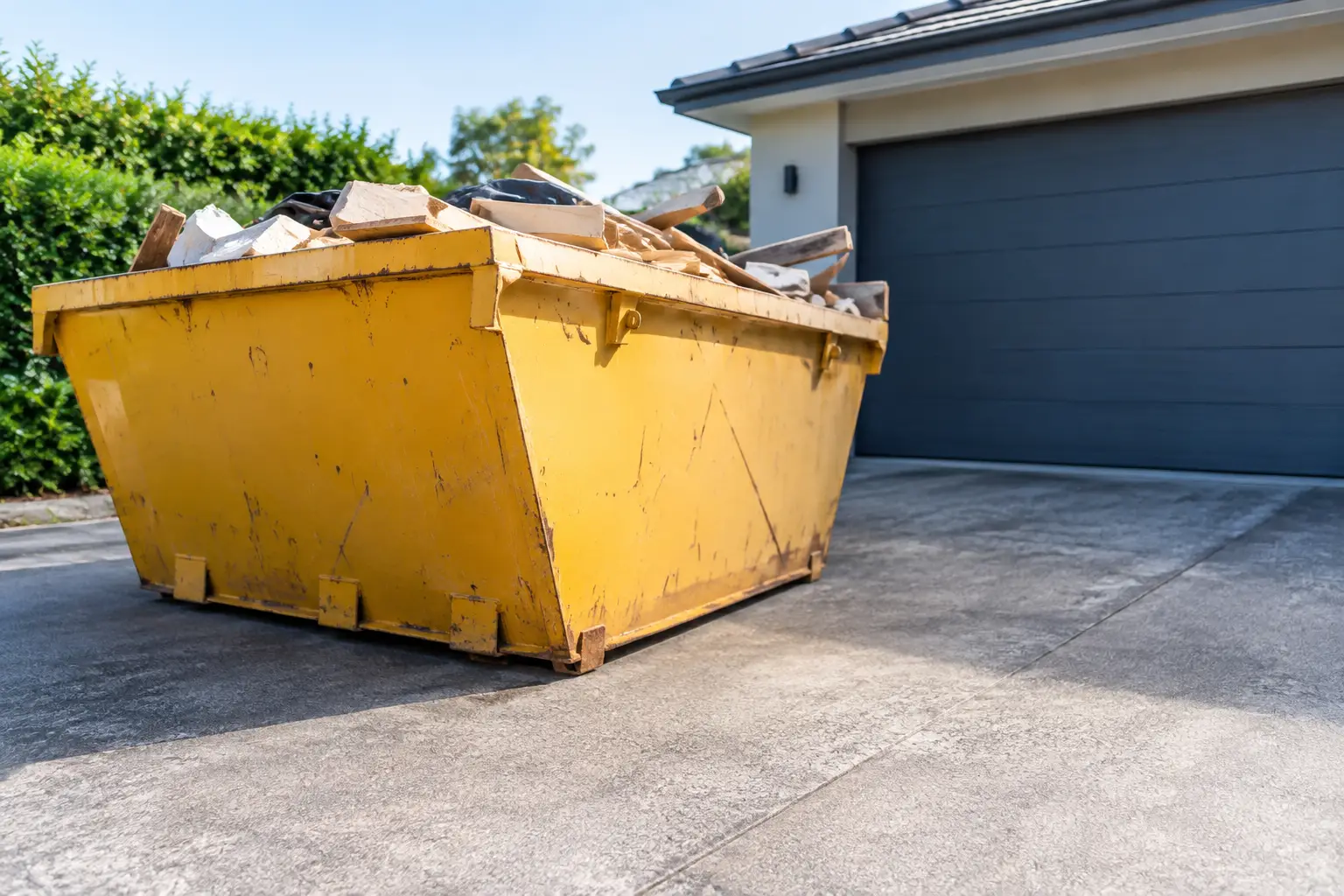
A skip is often the easiest way to deal with renovation waste, garden rubbish or a full garage clear-out. But it is sensible to ask: do skips damage driveways? The honest answer is that they can, particularly on a weak, uneven or already damaged surface. With the right location, sensible loading and proper protection underneath, the risk is usually greatly reduced.
At D J Recycling, the aim is to make waste removal straightforward. A quick look at your driveway before booking helps ensure a skip is the right option for your job – and protects the surface you have paid for.
Do skips damage driveways in normal use?
A skip is heavy even before you put anything in it. Once filled with soil, rubble, timber, tiles or old kitchen units, the weight increases considerably. That pressure is concentrated where the skip touches the driveway, so weak areas can sink, crack or become marked.
Damage is not inevitable. A sound concrete driveway or well-laid block paving can often cope well with a correctly placed skip, especially for lighter household waste. Problems are more likely where the surface is thin, loose, newly laid or showing signs of movement already.
The delivery and collection also matter. A skip lorry needs enough clear, level access to place and lift the skip safely. Tight turns, low branches, parked cars and sloping drives make the job more difficult and can increase the chance of accidental scuffs or pressure on kerbs and paving.
Which driveway surfaces are most at risk?
Every drive is different, but some materials need more care than others. Tarmac can soften in warm weather and may dip under a heavily loaded skip. Resin-bound surfaces can scratch or mark, especially if a skip is dragged into position rather than lowered carefully.
Block paving is often strong, but loose blocks, poor edging or sunken sections can shift under weight. Concrete is generally durable, although old concrete with existing cracks may break further. Gravel is less likely to crack, but the skip can leave ruts and make the area uneven when it is collected.
Freshly laid driveways deserve particular caution. Concrete, tarmac and resin need time to cure properly. If your surface is new, speak to the installer about its load-bearing limits before arranging a skip. It may be safer to wait, use a skip bag, or arrange a rubbish collection instead.
The biggest causes of skip-related damage
The skip itself is only part of the picture. Overloading it with dense waste is a common cause of driveway pressure. Soil, hardcore, bricks and tiles add up quickly, so a skip that looks only partly full may still be extremely heavy.
Water can make matters worse. A driveway that drains poorly may be softer beneath the surface after heavy rain. If blocks are already rocking, tarmac is crumbling, or concrete has wide cracks, the added weight of a skip may expose a problem that was already developing.
Poor positioning is another issue. Placing a skip directly over a drain cover, inspection chamber, weak edge or steep slope is not a good idea. It can create a safety risk as well as a risk of damage. The best position is a flat, solid area with enough room for delivery and collection without unnecessary manoeuvring.
How to protect your driveway before a skip arrives
The simplest precaution is to place strong boards beneath the skip. Timber scaffold boards are commonly used because they spread the load across a wider area and reduce direct contact with the surface. They need to be solid, flat and long enough to support the skip properly – thin offcuts of wood or a few small planks will not provide the same protection.
If you are providing boards, put them in place before delivery and make sure they are not rotten, split or sitting unevenly. The skip should rest on the boards, not half on a board and half on the driveway. This keeps the load more evenly distributed.
Clear the approach as well. Move vehicles, bins, plant pots and anything else that narrows access. Let the supplier know in advance about narrow gates, steep slopes, overhead cables, low trees or difficult turns. Clear information allows the driver to plan the safest placement.
It is also worth taking a few photographs of the driveway before delivery. This is not about expecting a problem. It is a sensible record of the surface condition, especially where there are existing cracks, stains or uneven areas.
Do not overfill the skip
Keep waste level with the top edge of the skip. Overfilled skips can be unsafe to transport and may need material removed before collection. More importantly for your driveway, avoid treating the skip as if it has unlimited capacity. If you are clearing heavy materials, choose the right skip size and follow the guidance on what can be loaded.
For a project producing mainly light waste such as packaging, wood, furniture and general household items, a larger skip may be appropriate. For dense materials like soil and rubble, a smaller load is often safer and more manageable. Being realistic about the waste type helps protect both the driveway and the people handling it.
When a skip may not be the best choice
A skip is not always the most convenient answer. If your drive is narrow, newly finished, unsuitable for a lorry, or simply too valuable to risk, there are practical alternatives.
A skip bag can work well for smaller clear-outs and can be positioned where access allows. A man-and-van rubbish collection is useful when you have bulky furniture, bags of household waste or a garage to clear but no suitable space for a skip. For larger jobs involving garden waste, earth or construction materials, grab hire may be a better fit where access permits.
Property clearance is another option for landlords, families dealing with a house move, or anyone managing an end-of-tenancy clear-out. Rather than loading a skip yourself, the waste can be removed directly from the property. It can save time and avoids putting a heavy container on the drive altogether.
Driveway or road: choosing the safest location
Some customers consider placing a skip on the road to avoid pressure on their driveway. That can be a sensible option, but it may require a permit from the local authority. The exact requirements depend on where you live and where the skip will sit, so this should be checked before delivery is booked.
A road placement also needs safe visibility for drivers and pedestrians. The skip may need lights, markings or other safety measures. Do not assume there is space just because the road looks quiet. Parking restrictions, dropped kerbs, junctions and access for neighbours can all affect whether it is suitable.
If you have a strong, level driveway with good access, it is often the easiest place for a skip. If you are unsure, explain the layout when making your enquiry. A few details about the surface, width and available space can prevent a wasted journey and help you choose the right service from the start.
A sensible approach for Worthing and Sussex homes
Driveways around Worthing and the surrounding Sussex areas vary widely. You may have a compact paved front garden, a long shingle drive, an older concrete area behind the house, or no off-road space at all. There is no one-size-fits-all answer, which is why it helps to match the waste solution to the property rather than automatically booking the biggest skip available.
Before arranging delivery, check the surface, measure the available space and think about the waste you are getting rid of. If boards are needed, have them ready. If access looks awkward, say so early. A straightforward conversation before the job begins is usually the best way to keep your clear-out moving and your driveway in good condition.
A little preparation goes a long way: choose a solid spot, protect it properly and use a waste service that suits the space you have.