

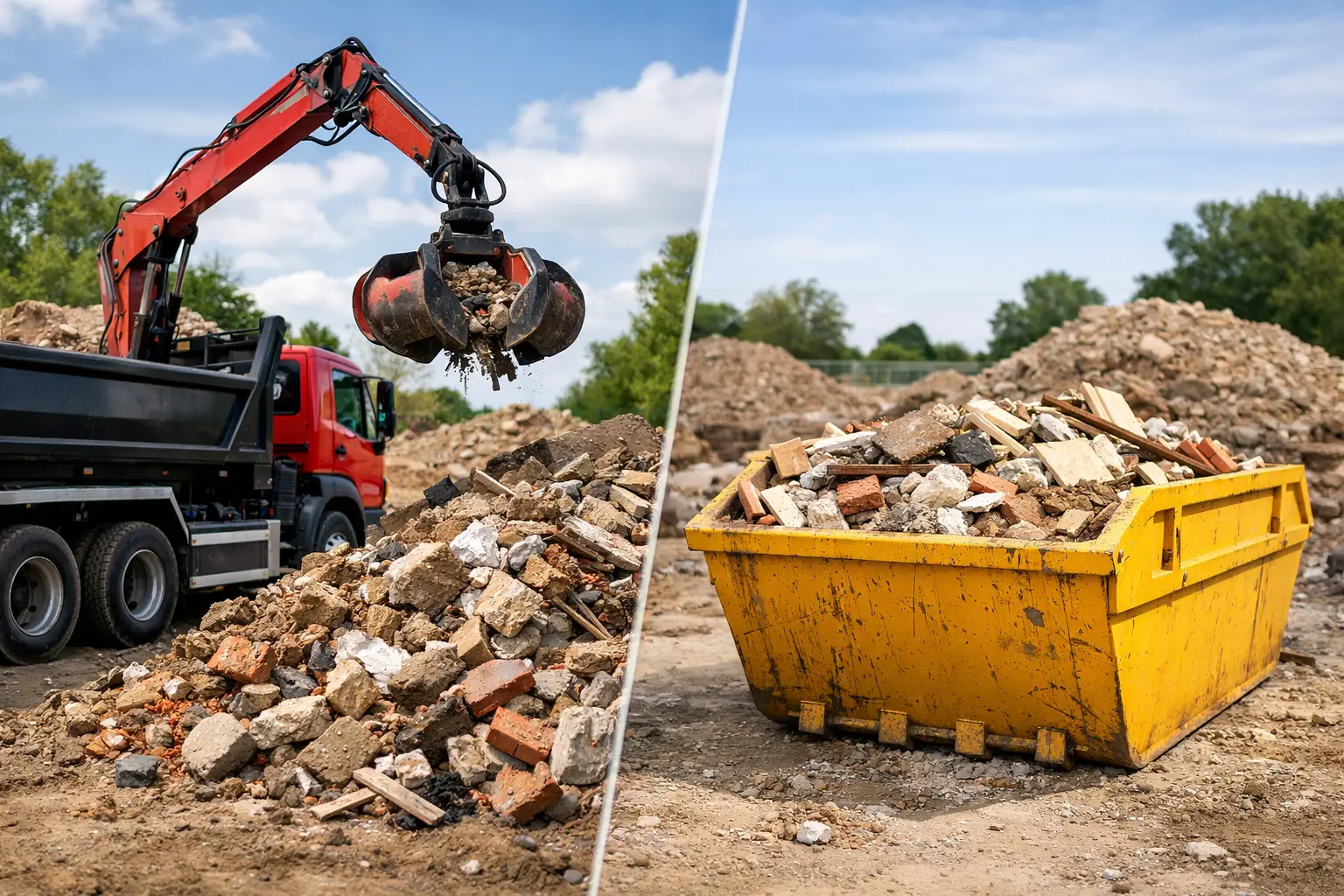
A driveway full of renovation waste can look manageable on Saturday morning and very different by Sunday afternoon. When comparing grab hire vs skip, the right choice usually comes down to one practical question: do you need time to fill a container, or do you need the waste gone quickly?
Both services are useful for household projects, garden clearances and small building jobs across Worthing and Sussex. But they work in different ways. A skip stays with you while you fill it. A grab lorry arrives, loads the waste using its hydraulic arm and takes it away in one visit. Understanding the difference before booking can save space, labour and unnecessary cost.
Grab hire vs skip: the main difference
A skip is a container delivered to your property or site. You load it yourself over a period that suits the job, then it is collected when you are finished. It is often the better option when waste will build up over several days, such as during a kitchen refit, bathroom renovation or gradual garage clear-out.
Grab hire is a collection service using a grab lorry. The driver operates the grab arm to lift loose waste from a pile and load it into the vehicle. The loading is usually much quicker than filling a skip by hand, making it a strong choice for soil, hardcore, rubble, green waste and large piles of mixed construction material.
Neither is automatically better. The best value comes from matching the service to your access, waste type and how quickly the job needs to be cleared.
Choose a skip when you need time and control
A skip gives you somewhere to put waste as you work. That matters when a project is not happening all at once. If you are stripping out a room, sorting a loft or clearing a property bit by bit, a skip keeps the mess contained rather than creating piles around the garden or drive.
It is also a practical choice where there is a clear place for delivery and collection. A private driveway is ideal. If the skip needs to sit on a public road, pavement or verge, a permit may be needed from the local authority. This can add time and cost, so it is worth checking before arranging delivery.
For most domestic jobs, a skip also makes loading straightforward. You can carry waste out as you go, separate reusable items before they are thrown away, and avoid the rush of having everything ready for a collection time.
A skip may suit you best if:
- Your waste will be produced over several days or weeks.
- You have room on private land for the container.
- You are happy to load the waste yourself.
- You need a tidy, contained place for ongoing rubbish.
D J Recycling offers skip sizes from 2 to 8 yards, which gives homeowners and small contractors options for anything from a modest clear-out to a larger refurbishment.
Skip hire can involve more manual work
The trade-off is that you do the loading. Heavy soil, broken concrete and bulky furniture can take time to carry to the skip, especially if access is awkward. You also need to avoid overfilling it. Waste should stay below the top edge so it can be transported safely.
If your drive is narrow, your garden is behind the house, or you have no suitable space at all, a skip can become less convenient than it first appears.
Choose grab hire for fast removal of large piles
Grab hire is designed for clearing substantial waste quickly. Rather than hiring a container and filling it over time, you create a pile in an accessible spot and the lorry loads it for you. This is particularly useful after landscaping, excavation, driveway work, demolition or a major garden clearance.
The grab arm can reach over walls, fences and hedges in many situations, so the waste does not always have to be placed right beside the lorry. That can make a real difference where a skip cannot be positioned close to the work area.
A grab service is often the easier route for heavy, loose materials. Soil, clay, turf, aggregates, bricks and hardcore add up quickly. Loading that material into a skip with a wheelbarrow can be hard work, whereas a grab lorry can clear a prepared pile in a short visit.
Access is the deciding factor with a grab lorry
A grab lorry needs safe road access and enough space to stop and operate. It is larger than a typical skip delivery vehicle, and overhead obstructions matter. Low trees, cables, parked cars and tight turns can prevent the arm from reaching the waste safely.
Before booking, think about where the lorry will park and where the waste can be placed. Keep the pile clear of fences, garden furniture and anything you want to keep. Do not bury unsuitable materials in the middle of the pile. A clear, accessible load helps the collection go smoothly and avoids delays on the day.
Grab hire is usually best when the waste is ready to go. It is not ideal if you are still dismantling a shed, waiting for tradespeople or unsure how much material the project will create.
Which option is cheaper?
There is no single answer, because price depends on the amount and type of waste, your location, access and the service required. A smaller skip can be a cost-effective solution for household rubbish produced over time. A grab lorry can offer better value when you have a large quantity of heavy waste that would otherwise require a large skip and considerable loading effort.
The hidden cost is often time. If you need to pay labourers to barrow tonnes of soil into a skip, or your project is delayed because a full skip is in the way, the apparent saving can disappear. On the other hand, booking a grab lorry for a small pile of light household waste may be more service than you need.
Be clear about what is in the load when asking for a price. Clean soil and hardcore are different from mixed waste containing timber, plastic, plasterboard and general rubbish. Separating materials where possible can make disposal simpler and may affect the most suitable collection option.
Think about waste types before you book
Both skips and grab lorries can handle a wide range of non-hazardous waste, but acceptance depends on the material. General household rubbish, wood, metal, garden waste, rubble and some furniture can usually be arranged through the appropriate service.
Some items need separate handling and should never be assumed acceptable. This includes asbestos, gas bottles, chemicals, paint, oils, batteries, electrical items and certain tyres. Plasterboard may also need to be kept separate from other waste. Mention these items when making your enquiry, rather than adding them to a skip or pile without checking.
For bulky items such as sofas, mattresses and white goods, a dedicated collection can sometimes be more sensible than hiring a skip or grab lorry. If you only have a few large items to remove, paying for the right service avoids paying for unused capacity.
A quick way to decide
Start by looking at the job, not just the size of the pile. If you need a container while work is ongoing, have suitable space and can load as you go, skip hire gives you flexibility. If the waste is already piled up, heavy or difficult to move, and the lorry can get close enough, grab hire gets it cleared with far less effort from you.
For jobs with limited access, no driveway or only a small amount of rubbish, it may be worth asking about a waste collection or skip bag instead. The right solution does not have to be a skip simply because that is the first option people think of.
Take a few photos, estimate the waste honestly and consider how long you need before it is gone. A quick conversation with a local waste team can then turn a messy clearance into a booked collection and a clear space again.
