

A bathroom refit can leave more behind than an old suite. Broken tiles, timber offcuts, packaging, carpet, plasterboard and rubble can quickly take over the drive, garden or hallway. Knowing how to recycle renovation waste before the job starts keeps the site safer, reduces unnecessary landfill and prevents a last-minute scramble to find somewhere for it all to go.
For most homeowners and small contractors in Worthing and across Sussex, the simplest approach is to separate waste as it is produced, then choose a collection method that suits the volume and access at the property. It saves time, makes recycling easier and can be better value than several trips to the tip in a loaded car.
Start by separating renovation waste
The easiest materials to recycle are the ones that stay clean and separate. Once a skip or pile becomes a mix of rubble, timber, plastic, food waste and paint tins, much less can be recovered. A little organisation at the start makes a real difference.
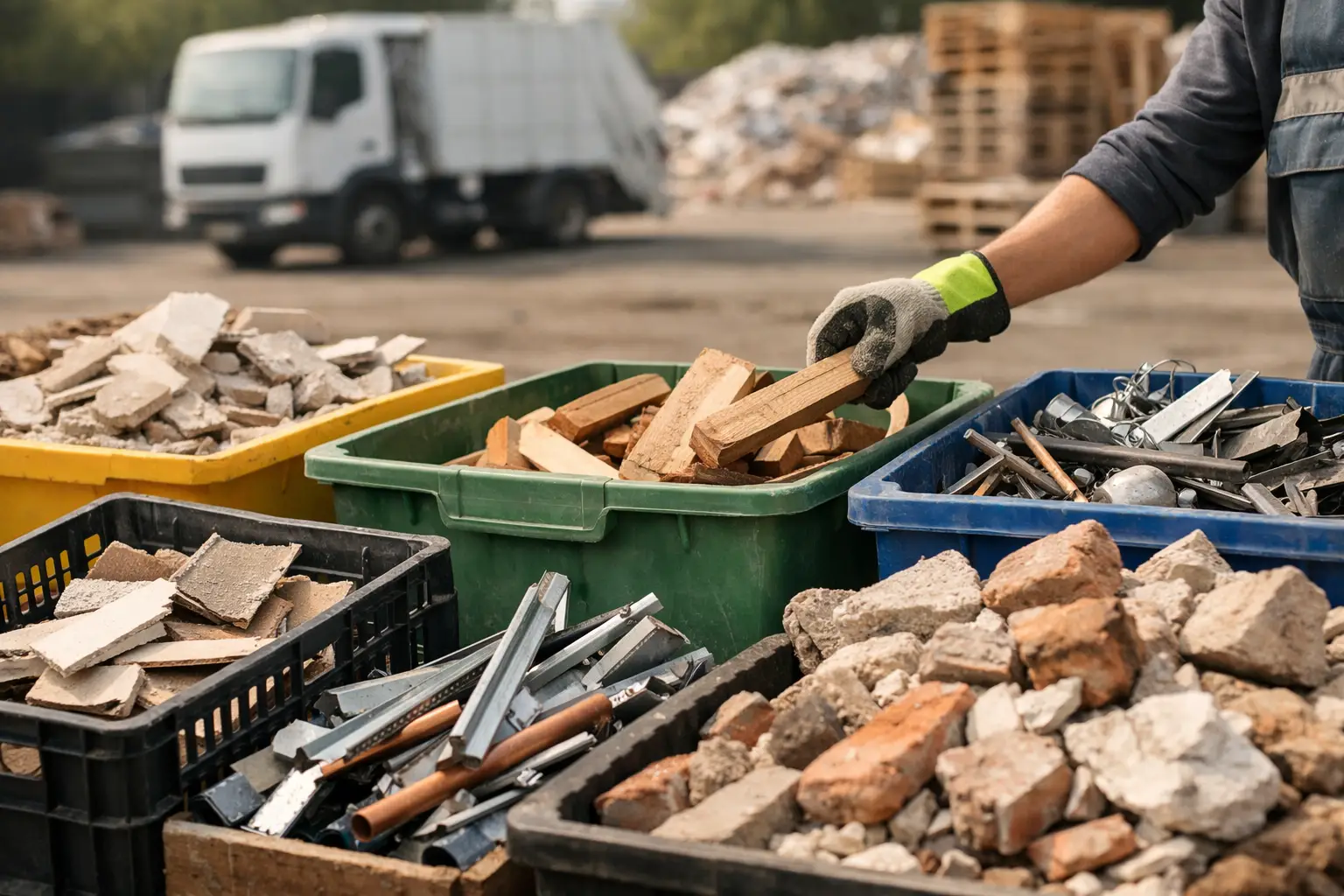
Set aside separate areas or containers for clean wood, metal, cardboard and plastic packaging where possible. Keep bricks, concrete, soil and tiles together as inert waste. These heavy materials can often be crushed and reused as aggregate, rather than being treated as general rubbish.
You do not need a perfect sorting station for a small job. Even keeping cardboard dry, stacking timber separately and putting metal fittings in one bucket will help. For a larger renovation, ask your waste provider what can go in the same skip and which materials need their own collection.
Materials that are commonly recyclable
Many of the bulky materials from a kitchen, bathroom or general refurbishment have a recycling route when handled properly. Metal is particularly valuable to separate. Copper pipe, steel radiators, aluminium frames, old taps and cables can all be recovered rather than thrown in with mixed waste.
Clean timber can also be recycled, although painted, treated or heavily contaminated wood may be handled differently. Doors, joists, skirting boards and offcuts should be kept clear of plaster, insulation and general rubbish where practical.
Bricks, blocks, concrete, paving slabs and clean soil are often suitable for recovery or processing into recycled aggregate. This is a good reason not to use a rubble pile as a general dumping spot for old carpet, plastic sheeting or food packaging.
Cardboard from flat-pack kitchens, appliances and flooring deliveries is straightforward to recycle if it is dry and flattened. Plastic wrap, tubs and protective packaging may be recyclable too, but it depends on the type of plastic and the local facility handling the waste.
Take extra care with difficult materials
Some renovation waste cannot simply be placed in a standard skip. Plasterboard is one of the most common examples. It needs separate handling because, when mixed with biodegradable waste, it can create harmful gases in landfill conditions. Keep it dry and separate from other rubbish, then arrange the correct disposal route.
Paint, varnish, adhesives, solvents, sealants and chemicals should also be kept out of general waste unless you have been told they are accepted. Leave lids on containers, label anything unknown and never pour leftover products down a drain or onto the ground.
Electrical items need their own treatment too. Old extractor fans, light fittings, power tools and appliances may contain components that should be recovered separately. Mattresses, sofas and upholstered furniture can also have specific disposal requirements, particularly where fire-retardant materials are involved.
The biggest warning is asbestos. It may be present in older garage roofs, pipe insulation, textured coatings, floor tiles or cement sheets. If you suspect asbestos, stop work and get professional advice before moving or breaking the material. It should never be placed in a normal skip or mixed with renovation waste.
Choose the right way to remove the waste
There is no single best option for every project. The right choice depends on how much waste you have, what it is made of, how quickly you need it gone and whether there is room outside your property.
A skip is usually the practical choice for a room refurbishment, garden landscaping project or ongoing renovation where waste will build up over several days. You can load it as you work, keeping the area clear without repeatedly bagging and storing rubbish. For a smaller bathroom, hallway or decorating job, a skip bag can be a more flexible option if the waste volume is modest.
If there is no space for a skip, or access is tight, a man-and-van style rubbish collection can be easier. This works well for a pile of old kitchen units, broken-up furniture, packaging and bagged rubbish that is ready to go. It is also useful when you want the waste removed quickly rather than sitting outside while the job continues.
For heavy rubble, soil or large quantities of mixed building waste, grab hire may be more efficient. A grab lorry can collect material from a pile, saving the effort of carrying it through the house or loading it by hand. It depends on road access and whether the lorry can safely reach the collection point.
At D J Recycling, customers can choose from skips, skip bags, rubbish removal and grab hire, rather than trying to make one service fit every job. That matters when a renovation changes halfway through, as they often do.
Avoid the mistakes that cost time and money
One common mistake is ordering too small a skip because the room itself looks small. Old units, flooring, packaging and the waste hidden behind fixtures take up more space than expected. Equally, ordering an oversized skip for a few bags and a dismantled wardrobe may not be the best value.
Think about the waste by volume, not just the size of the room. A kitchen rip-out often produces bulky cabinet carcasses and worktops. A bathroom project can create surprisingly heavy loads of tiles, plaster, sanitaryware and rubble. Heavy waste has weight limits, so it is worth explaining the job clearly when booking.
Another issue is overfilling. Waste should not stick out above the top of a skip, as it cannot be transported safely on the road. Break down boxes, dismantle furniture where sensible and load flat items around the sides to use the space properly. Put heavy materials at the bottom and lighter, bulky waste on top.
Do not use a skip as a shortcut for everything in the shed, garage and house. Gas bottles, tyres, batteries, fridges, liquids, hazardous materials and asbestos generally need separate arrangements. If you are unsure about an item, check before it goes in. Sorting it afterwards is harder and can lead to delays or extra charges.
Plan waste removal before work begins
The best time to arrange waste removal is before the first tile comes off or the first cupboard is removed. Decide where a skip, bag or collection pile can go without blocking access, upsetting neighbours or creating a hazard. If a skip needs to sit on a public road, allow time for any permit requirements.
Keep a clear route from the work area to the collection point. Cover flooring and protect walls if waste has to pass through the house. For flats, shared entrances and properties with limited parking, a timed collection may be more suitable than leaving a skip outside.
If you are using tradespeople, agree who is responsible for disposal. Some quotes include waste removal, while others leave it to the customer. Getting this clear at the start avoids a pile of old materials being left at the end of the job with no collection booked.
A cleaner project from first strip-out to final finish
Recycling renovation waste is not about making a complicated job even harder. It is about separating what you can, keeping problem materials out of the wrong waste stream and choosing a collection service that fits your property and project. With the removal arranged early, you can focus on the renovation itself and enjoy the finished space sooner.
