

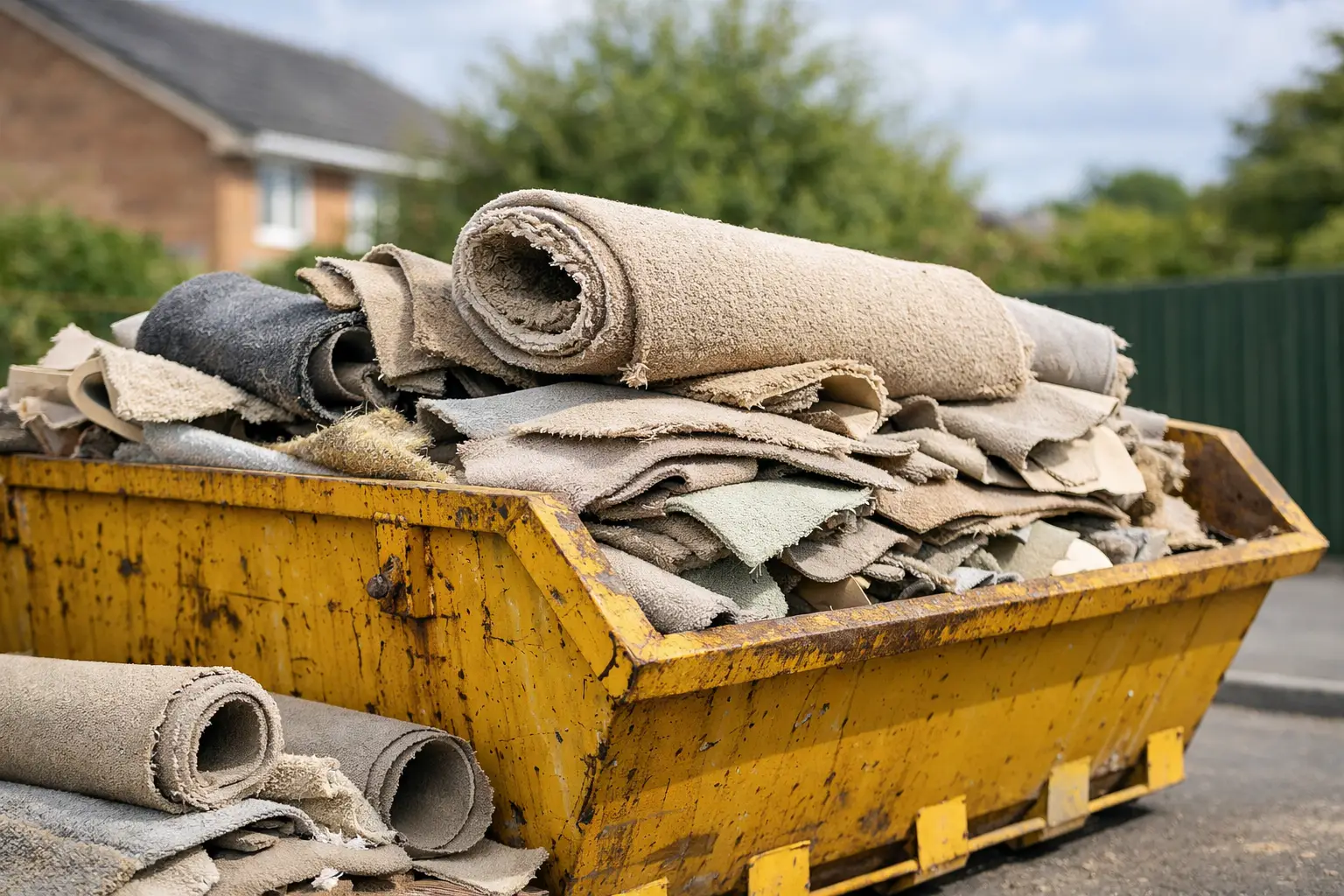
A room full of old carpet can take up far more space than expected once it has been lifted. If you are asking, “can you put carpet in a skip?”, the answer is usually yes – but it depends on the type of waste, the skip provider’s rules and what else is going in the skip.
For most home clear-outs, refits and rental property jobs, old carpet can go into a general waste skip. The key is to prepare it properly, avoid mixing in restricted items and choose a skip size that gives you enough room for the bulky material.
Can you put carpet in a skip?
In most cases, carpet, underlay, rugs and old flooring offcuts can be placed in a skip hired for general household or construction waste. This makes skip hire a practical choice when you are replacing flooring across several rooms, clearing a whole property or carrying out wider renovation work.
Carpet is bulky rather than especially heavy. A rolled-up living room carpet can fill a surprising amount of a small skip, particularly when it is mixed with underlay, gripper rods, furniture packaging and other rubbish. For a single room, a small skip may be enough. For a full house refit, it is often worth moving up a size rather than struggling to make everything fit.
Do not overfill the skip. Waste must sit below the top edge so it can be transported safely on the lorry. Loose carpet hanging over the sides or piled above the rim may need to be removed before collection.
Prepare old carpet before it goes in
A little preparation makes the job quicker, safer and easier to load. Lift the carpet carefully and cut it into manageable strips or rolls where needed. Large rolls are awkward to carry and can take up more room than necessary if they are thrown in loosely.
Take out any obvious metal fixing strips, nails and screws if you can do so safely. These can normally go in a mixed waste skip too, but separating them from the carpet reduces the chance of cuts while handling it. Keep sharp items contained rather than leaving them loose at the bottom of a bag or roll.
If the carpet is wet, heavily soiled or contaminated by a flood, pet waste, mould or chemicals, check with the provider before loading it. Standard household carpet is one thing; contaminated material can need a different disposal route. The same applies if you are clearing a commercial unit with unusual waste on site.
What about underlay and carpet tiles?
Most ordinary foam or felt underlay can go in with the carpet. Carpet tiles are also commonly accepted as general waste, although they are often denser and can be easier to stack than rolled carpet.
Wooden gripper rods, laminate offcuts and empty flooring adhesive containers may be accepted in a mixed waste skip, but wet paint, liquid adhesive, solvents and chemical products should not be added unless you have been told they are allowed. Keep any packaging with hazard symbols separate and ask first.
What should not go in with your carpet
Hiring a skip is straightforward when the waste is ordinary household or building rubbish. Problems tend to arise when restricted materials are mixed in without notice. These items can affect how the load is handled and may lead to extra charges or refused collection.
Avoid putting the following in a general skip unless you have arranged it in advance:
- Asbestos or suspected asbestos-containing materials
- Gas bottles, fuel cans or flammable liquids
- Paint, solvents, oils and other hazardous chemicals
- Electrical items such as TVs, fridges, freezers and computers
- Tyres, batteries and medical waste
There is one separate point to remember when clearing furniture alongside flooring. Upholstered seating such as sofas, armchairs and recliners can be subject to different rules because of persistent organic pollutants, often referred to as POPs. Do not assume an old sofa can simply be put in the skip with your carpet. Arrange the right collection service or confirm the correct disposal method first.
Choosing the right skip size for carpet waste
The right size depends less on the weight of the carpet and more on its volume. A 2-yard skip can suit a small bathroom, box room or a few bags of offcuts. Once you are removing carpet from bedrooms, hallways and stairs, the waste soon builds up.
A 4-yard skip is often a sensible option for a one or two-room flooring job with some extra household rubbish. For a larger renovation, a landlord clearing a property between tenants, or a full-house carpet replacement, a 6-yard or 8-yard skip gives you more breathing room.
Think about the rest of the job before booking. If you are also getting rid of wardrobes, broken furniture, old kitchen units or garden waste, choosing a larger skip at the start can be better value than ordering a second one later. On the other hand, if it is only one rolled carpet and a few items of underlay, a skip bag or a bulky waste collection may be more convenient.
When a skip is not the best option
A skip needs somewhere safe and accessible to be placed. If you have a driveway, front garden space or a suitable area on private land, delivery and collection are usually simple. If the skip needs to sit on a public road, a permit may be required, so allow time to arrange this before the work starts.
For flats, narrow streets, properties without off-road space or jobs with only a small amount of carpet, a rubbish collection can save the hassle. The waste can be removed directly without leaving a skip outside your home. This is also useful when you cannot carry heavy rolls downstairs, have a tight deadline at the end of a tenancy or need a property cleared quickly.
D J Recycling can help customers in Worthing and surrounding Sussex areas choose between skip hire, skip bags and collection services, depending on the amount of waste and access at the property. A quick description of the carpet, the number of rooms and any other items you need removed is usually enough to point you towards the most suitable option.
Make carpet disposal easier on collection day
Keep the carpet waste together where possible, rather than scattering rolls across the skip. Put larger, flatter pieces in first and use gaps around them for bags of lighter waste. This helps make better use of the available space.
Do not compress carpet with heavy materials if there are sharp gripper rods or nails mixed in. Load carefully, wear gloves and sturdy footwear while stripping rooms, and keep children and pets away from the work area. If you are removing carpet from stairs, take particular care with exposed grippers, as these can stay hidden after the carpet has been lifted.
If you are unsure whether a particular flooring material is suitable for the skip, ask before booking or before loading it. A clear answer at the start prevents delays, avoids extra costs and means your old carpet can be removed without turning a simple flooring job into a bigger clear-out problem.
