

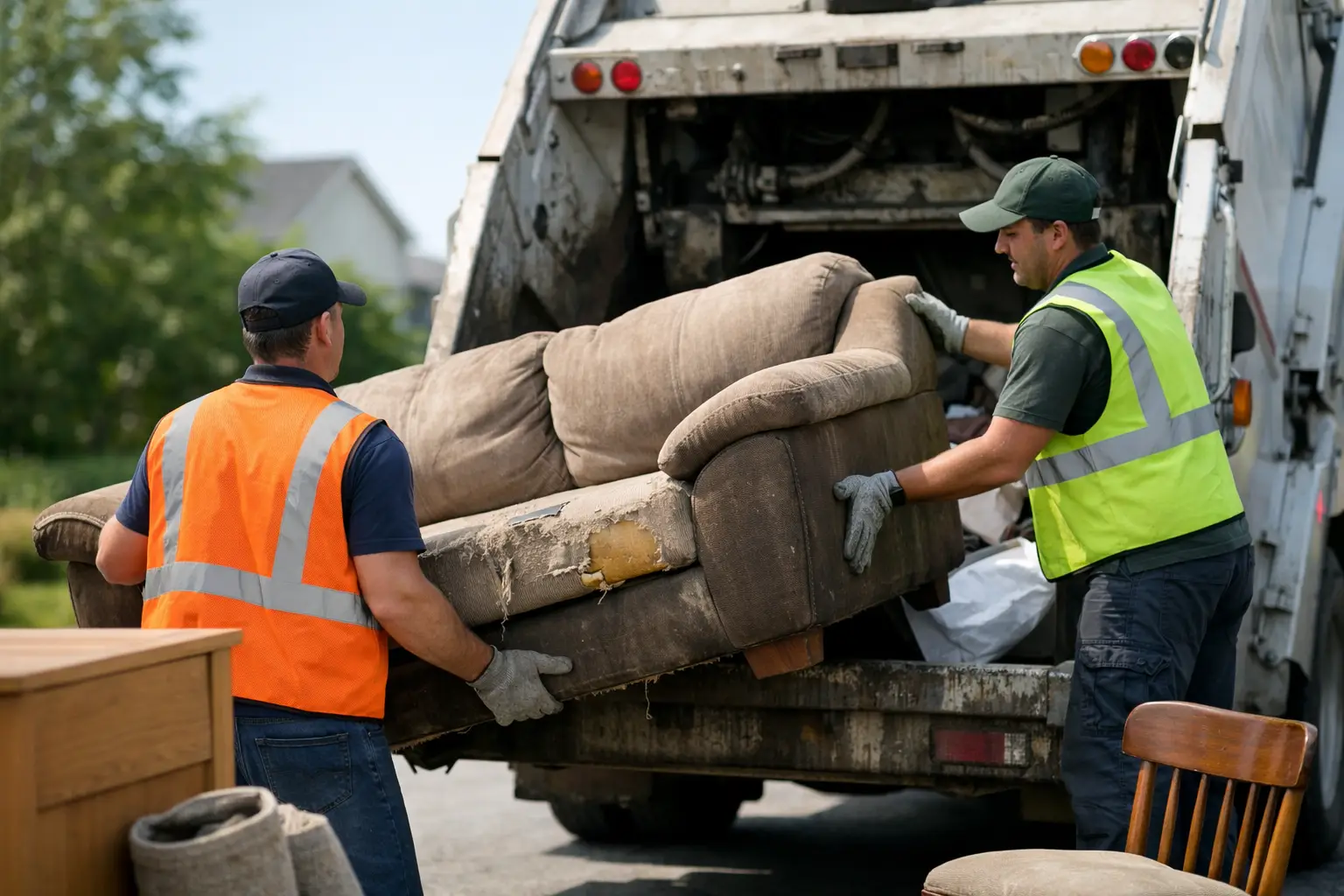
That old sofa usually sits around longer than planned. One broken leg, a failed house move, or a last-minute tenant checkout is often all it takes to turn a useful item into a problem. If you are wondering how to dispose of bulky furniture without hiring a van, making multiple trips, or risking a refused collection, the good news is you have a few solid options.
The right one depends on what the furniture is, what condition it is in, and how quickly you need it gone. A single armchair is one thing. A full dining set, wardrobes, mattresses and damaged units from a clear-out are another. The cheapest route is not always the easiest, and the fastest route is not always the best value if you have enough waste to fill a skip.
How to dispose of bulky furniture without hassle
Most people start by asking whether the item can be reused, recycled, or collected as waste. That is the right order to think about it. If the furniture is still safe and clean, reuse is worth considering first. If it is broken, stained, water-damaged, or too worn to pass on, disposal is usually the practical answer.
For many households, the main options are council bulky waste collection, taking it to a household waste recycling centre, hiring a skip, booking a man-and-van style rubbish collection, or arranging a full clearance if there are several items involved. Each has pros and cons.
Council collection can work well if you are not in a rush. It is often priced per item and may come with limits on what they will take. Some councils will not collect furniture that is too damaged, too large, or left in the wrong place. Waiting times can also be longer than people expect, especially after bank holidays or during busy moving periods.
Taking furniture to the tip can seem cheaper on paper, but only if you already have a suitable vehicle, enough help to lift it safely, and time to queue and unload. A three-seater sofa does not become easier to deal with just because the disposal point is free. For many people, the transport is the real problem.
A skip makes sense when bulky furniture is part of a bigger job, such as a renovation, garage clearance, or house move. It gives you room for mixed waste and lets you load in your own time. The catch is space. If you have nowhere suitable to place a skip, or you only need to remove one or two large items, a collection service is often the simpler option.
A dedicated rubbish removal or sofa collection service is usually the quickest route when convenience matters most. The item is collected, loaded, and taken away without you having to dismantle half the house to get rid of it. That tends to suit landlords, tenants, families replacing old furniture, and anyone working to a deadline.
When furniture can be reused instead of thrown away
Before you book disposal, check whether the item has any realistic second life left in it. A sturdy chest of drawers with a few scratches is very different from a broken divan base or a damp wardrobe that has been sitting in a garage for months. Reuse only makes sense if the furniture is safe, structurally sound, and clean enough for someone else to want.
Selling or giving away furniture can work for tables, chairs, bed frames, bookshelves and some wardrobes, especially if they are modern, solid, and easy to move. Sofas and mattresses are harder. Many people will not take upholstered furniture unless it is in very good condition, and some outlets have strict rules on fire safety labels and hygiene.
Be honest about the condition. If something is missing parts, smells musty, has pet damage, or has been patched together, it may sit online for days while taking up valuable space. At that point, disposal stops being wasteful and starts being practical.
Choosing the best disposal method for the job
The best answer to how to dispose of bulky furniture often comes down to volume and access. If you have one mattress and one bed frame on the ground floor, a collection is usually straightforward. If you have a full flat to clear with furniture upstairs and limited parking outside, that needs more planning.
Think about these questions before choosing. How many items are going? Are they heavy or awkward to carry? Do you need them gone today, this week, or whenever a slot is available? Do you have outside space for a skip? Will the waste include more than furniture, such as carpet, boxes, old fittings or general rubbish?
If there is mixed waste from a property clearance or refurbishment, a skip or full clearance can be better value than paying per item. If it is just one or two bulky pieces and access is reasonable, a direct collection keeps it simple. For awkward jobs, convenience often beats trying to force the cheapest option.
Sofas, wardrobes and beds need different handling
Not all bulky furniture is equal. Sofas are often the hardest to manoeuvre because of their size and shape. Even when they are not especially heavy, tight hallways, narrow stairs and awkward door frames can turn removal into a struggle. Some need to be partly dismantled before they can be taken out safely.
Wardrobes can be deceptively time-consuming. Flat-pack units may come apart easily, but older or more solid wardrobes can be bulky, heavy and fragile once moved. Beds usually involve separate parts, but mattresses create their own issue because they are large, flexible, and awkward to transport in a standard car.
That matters because the disposal method needs to fit the item, not just the postcode. A service that handles lifting, loading and transport can save a lot of time when access is poor or the furniture is too big to move alone.
What to check before booking a collection
Whether you use the council or a private waste service, a few details can prevent delays. First, check exactly what is being collected. Upholstered items, dismantled furniture, mattresses and mixed loads may be priced differently. If you say “old chair” but mean a large recliner, the job may need a different vehicle or crew.
Next, think about access. Is the furniture already outside, or does it need to be removed from inside the property? Are there stairs, restricted parking, or a long carry from the house to the vehicle? These details affect time and cost, and they are best flagged early rather than on the day.
It also helps to be clear about timing. If you are dealing with an end-of-tenancy deadline, a property sale, or new furniture arriving tomorrow, speed matters. In that case, a fast local collection service is usually more reliable than waiting for the next available public slot.
Avoid fly-tipping and informal disposal
Leaving bulky furniture on the pavement and hoping it disappears is not disposal. It can count as fly-tipping, even if the item is left neatly outside your own home. The same goes for asking an unlicensed operator to take it away for cash with no paperwork or traceable details.
If waste is dumped illegally after collection, the original holder can still face problems. That is why it is worth using a proper waste service with clear booking details and a straightforward process. Cheap can become expensive very quickly if the job is not handled properly.
A practical local option when time matters
For customers in Worthing and nearby Sussex areas, the easiest route is often to match the service to the amount of waste rather than force everything into one method. A couple of large items may suit a direct collection. A full clear-out may be better with a skip, skip bag or house clearance service. That flexibility is where a local company such as D J Recycling can be useful, because you are not limited to one fixed way of getting the job done.
That matters when space is tight, access is awkward, or you simply need a quick answer. If you do not have room for a skip, a collection can solve the problem. If you have ongoing waste from a larger clear-out, a skip may work out better. The point is to make bulky furniture removal fit the job, not the other way round.
Getting rid of large unwanted furniture does not need to turn into a weekend of lifting, hiring vans and waiting in queues. Pick the option that matches the size of the job, be realistic about the condition of the items, and do not let bulky waste sit around longer than it needs to.
