

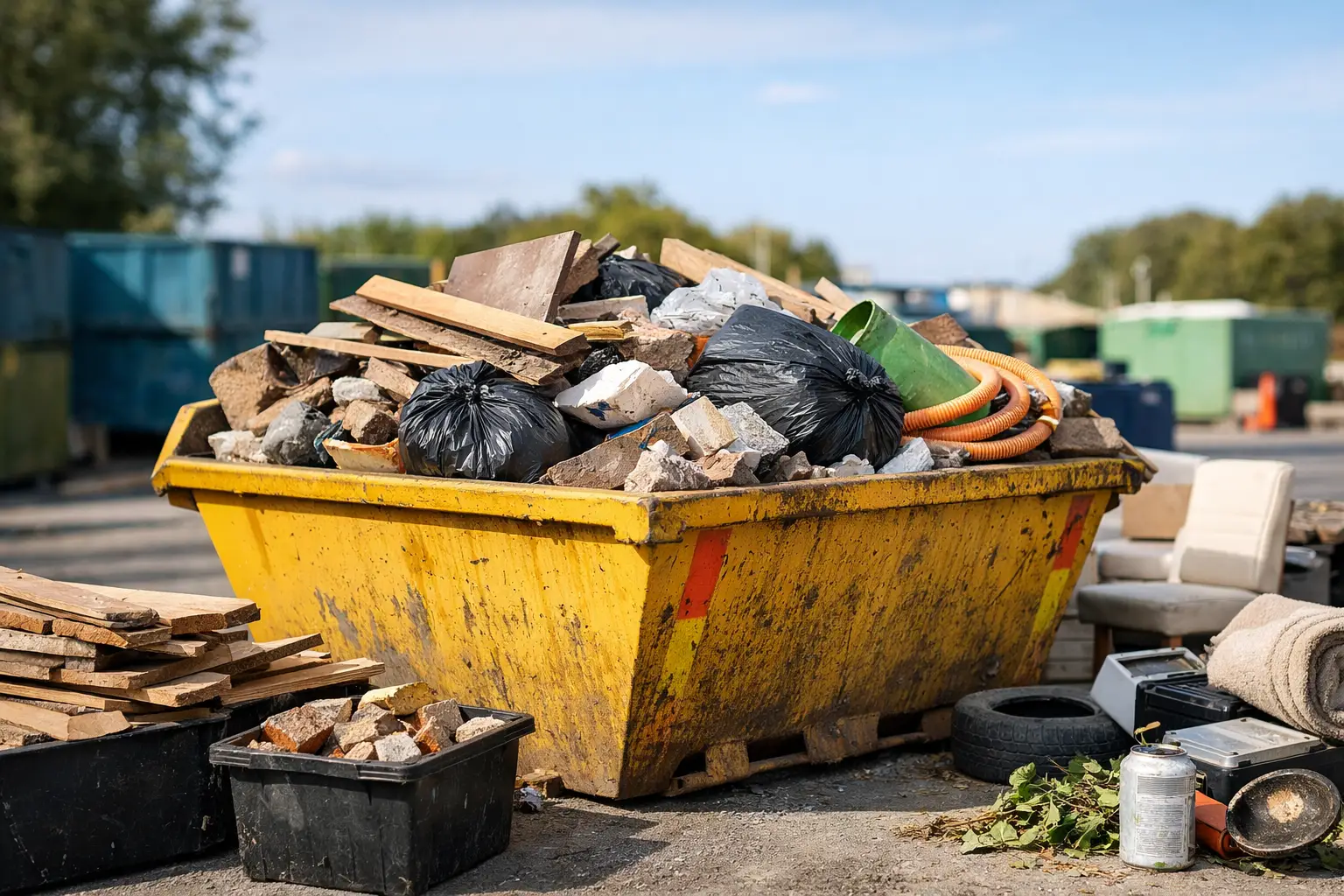
If you have got a driveway full of rubble, old furniture in the garden, or a garage that has turned into a dumping ground, one question comes up fast – what can go in a skip? Getting that right matters. Put the wrong items in, and you can end up with delays, extra charges, or waste that cannot be taken away at all.
The good news is that most everyday household, garden and renovation waste can go into a skip without any trouble. The catch is that some materials are restricted because of safety rules, recycling requirements, or how they have to be processed. If you know the difference before the skip arrives, the whole job is easier.
What can go in a skip for most jobs?
For a typical home clear-out, garden tidy-up or small building job, skips are suited to a wide mix of non-hazardous waste. That includes things like wood, soil, hardcore, bricks, plasterboard in some cases, old furniture, cardboard, general rubbish, green waste and unwanted household items.
If you are ripping out a kitchen, clearing a shed, replacing fencing or sorting a property after a move, a skip is often the simplest option because you can load it as you go. It keeps the mess in one place and saves multiple trips to the tip.
In practical terms, the waste that is usually accepted falls into a few common groups.
Household waste
General household rubbish can usually go in a skip, especially when it comes from a clear-out rather than normal weekly bin waste. Old toys, broken chairs, shelving, bagged clutter, carpets, curtains and non-electrical fittings are commonly accepted.
That said, it helps to think about size and weight. A few bulky items are fine, but if you are mainly getting rid of heavy materials such as tiles, concrete and soil, you may need a smaller skip than you expected because skips have weight limits as well as size limits.
Garden waste
Grass cuttings, hedge trimmings, branches, plants, leaves, timber from old planters and worn-out fencing can usually go in. Garden waste is one of the most common reasons people book a skip, especially after a big tidy-up or landscaping job.
The main thing to watch is contamination. If your garden waste is mixed in with paint tins, chemicals or treated timber, it may need to be separated. Clean green waste is much easier to process than mixed waste.
Building and renovation waste
This is where skips are especially useful. Bricks, rubble, paving slabs, tiles, ceramics, old bathroom suites, wood, metal, doors, kitchen units and similar materials are generally suitable.
If you are doing DIY or light trade work, this is often the bulk of what goes in. But not every builder’s material is handled the same way. Plasterboard, for example, is often accepted only if kept separate, because it cannot always be mixed with general waste. It depends on the waste stream and where it is being processed.
What cannot go in a skip?
This is the part people tend to overlook. Some items are banned from skips altogether, even if they seem like normal rubbish. In most cases, that is because they are hazardous, flammable, pressurised, or require specialist recycling.
Common restricted items include asbestos, paint, solvents, chemicals, gas bottles, tyres, batteries, fridges, freezers, televisions, computer monitors and other electrical goods. Mattresses are also restricted by many providers because of how they have to be handled and disposed of.
Items like these cannot just be buried in mixed waste. They need separate processing, and disposal rules are much stricter than they are for general rubbish.
Hazardous waste
Anything that could harm people, contaminate other waste or create a fire risk is likely to be classed as hazardous. That includes things like engine oil, pesticides, cleaning chemicals, fuel, adhesives and some types of insulation.
Even small amounts matter. One half-full tin of paint leaking into a skip can spoil a load that would otherwise be sorted and recycled. That is why these items should never be added without checking first.
Electrical items and white goods
Washing machines, tumble dryers, microwaves, cookers, televisions, laptops and similar items are often handled under separate recycling rules. Fridges and freezers are especially restricted because they contain components that need specialist treatment.
People are often surprised by this because these items feel bulky rather than dangerous. But from a waste handling point of view, they are a separate category.
Tyres, batteries and gas cylinders
These are some of the clearest no-go items. Tyres cannot usually be mixed into skip waste, and batteries must be handled separately because of fire and contamination risks. Gas bottles and cylinders should never go in a skip full stop.
If you are clearing a garage or workshop, it is worth setting these aside before loading starts. They are easy to miss when you are trying to get the job done quickly.
It depends on the type of skip and the waste mix
Not all skips are loaded in the same way, and not every job suits mixed waste. If you are mainly disposing of hardcore such as bricks, soil and concrete, a heavy waste skip is usually the better fit. If you are clearing out a house and the waste is more varied, mixed general waste makes more sense.
This matters because weight adds up quickly. A skip full of broken paving slabs is very different from a skip full of cardboard and old cupboards. You might fill both to the top, but one could be far heavier than the other.
There is also the question of space. If you do not have room for a skip on your drive, or if permit issues make roadside placement awkward, another collection method may be easier. For smaller jobs or awkward access, a skip bag or a direct rubbish collection can be the more practical choice.
How to avoid problems when loading a skip
The simplest way to avoid delays is to be clear about what waste you have before the skip is delivered. Most problems happen when restricted items are thrown in at the last minute.
Try to keep obvious no-go waste separate from the start. If you are doing a full clear-out, put paint, batteries, electricals and anything chemical-looking to one side. That makes it much easier to check what can be collected and what needs another route.
It also helps to load the skip sensibly. Put flat and heavy items at the bottom, lighter waste on top, and do not overfill above the sides. An overloaded skip may not be collected until excess waste is removed, which slows the whole job down.
If you are not sure about one or two items, ask before loading them. That is always quicker than having a collection held up later.
What can go in a skip if you are clearing a house or flat?
House and flat clearances usually involve mixed waste, which is why skips are so popular for these jobs. Old wardrobes, broken furniture, carpets, boxes of unwanted belongings, kitchen units, timber, general junk and non-hazardous household waste can often all go together.
The exceptions are the same ones that catch people out elsewhere – electricals, paint, chemicals, fridges, freezers and anything hazardous. Sofas and mattresses may also need special handling depending on the provider and the current disposal rules.
For landlords, tenants and property managers, this is where a quick conversation at the start saves time. If the property includes bulky items that are restricted, it may be more efficient to combine skip hire with a separate collection service rather than trying to force everything into one solution.
When a skip is not the best option
A skip is convenient, but it is not always the cheapest or easiest answer. If you only have a few bulky items, no off-road space, or waste that includes several restricted materials, a man-and-van style rubbish collection or dedicated item pickup can make more sense.
That is often the case with sofa disposal, mattress disposal, white goods, or small clear-outs where hiring a full skip would be more than you need. Local firms such as D J Recycling usually offer different options for exactly that reason. The right service depends on the amount of waste, the type of waste, and how quickly you need it gone.
The simplest rule to follow
If the waste is general, non-hazardous, and comes from household, garden or light building work, it can usually go in a skip. If it is electrical, chemical, pressurised, flammable, or needs specialist recycling, assume it cannot until you have checked.
That one rule covers most situations and helps you avoid the usual mistakes. A skip should make your job easier, not give you another problem to sort out.
If you are staring at a pile of rubbish and wondering where to start, sort the obvious restricted items first, be realistic about weight, and ask when something is unclear. It is the quickest way to keep the job moving and get the waste gone without hassle.
