

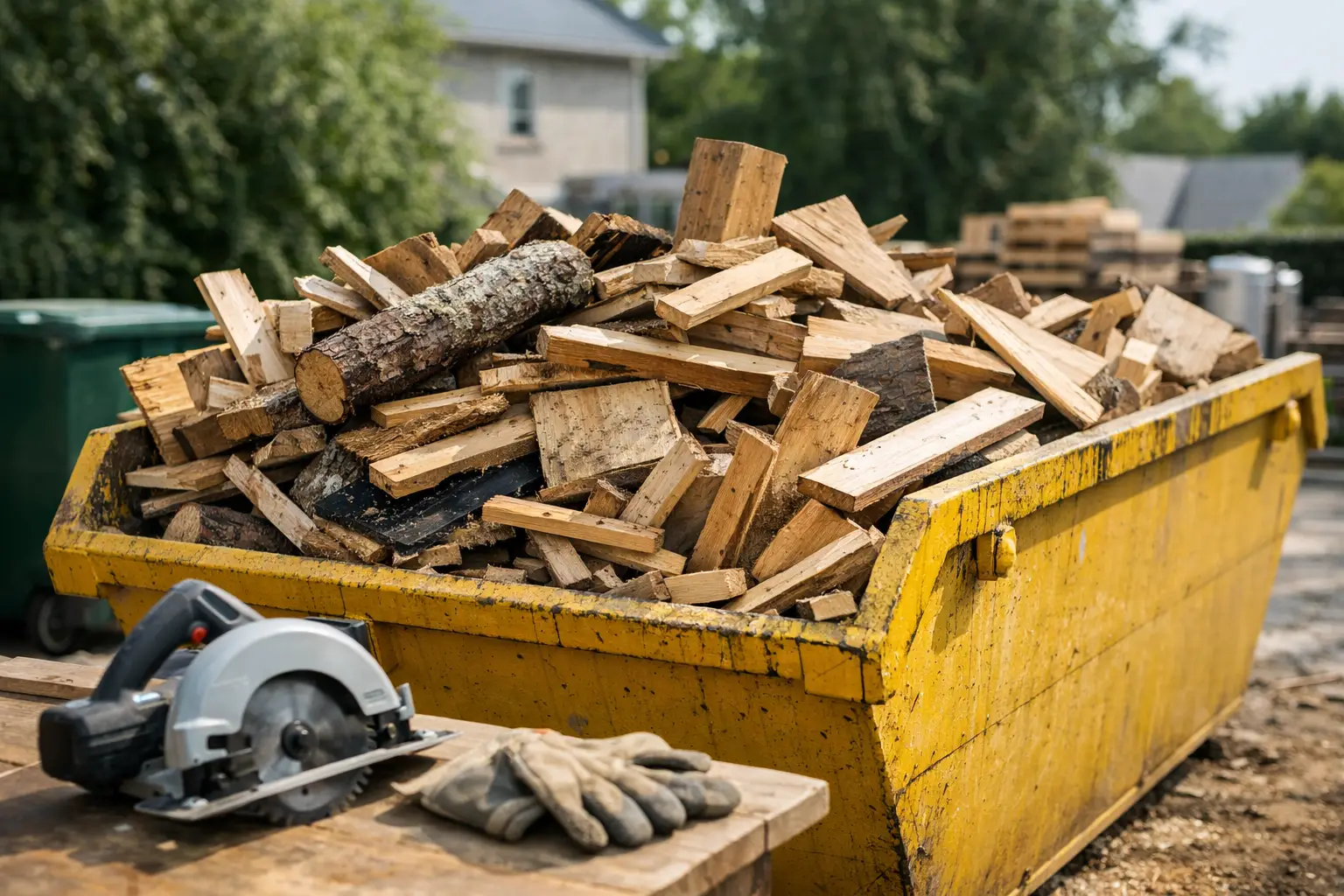
A pile of old fence panels, broken kitchen units or floorboards can take up more room than expected. So, can you put wood in a skip? In most cases, yes. Clean, untreated timber and common household wood waste can usually go into a general mixed-waste skip, making skip hire a straightforward option for renovation, garden and clearance jobs.
The detail matters, though. Some wood products are treated, contaminated or mixed with materials that need different handling. Knowing the difference before your skip arrives helps avoid delays, extra charges or having to unload items later.
What types of wood can go in a skip?
Most everyday timber is suitable for a skip. This includes old furniture made mainly from wood, floorboards, timber offcuts, internal doors, shelving, pallets, skirting boards, untreated garden timber and fence panels.
Wood from a kitchen or bedroom rip-out can also normally be placed in a skip. Chipboard cupboards, timber worktops, wardrobes and wooden drawers are common examples. If an item has small fittings such as hinges, screws or handles, there is generally no need to strip every piece down first. Just remove anything that is hazardous or clearly unsuitable, such as batteries, electrical parts or gas components.
For garden clearances, branches and prunings are usually accepted as green waste, while old timber edging, trellis and damaged wooden planters can often go into a mixed skip. Keep soil, turf and heavy rubble separate if possible. A skip filled with dense materials becomes very heavy quickly, and the right skip size or waste collection service can save you money.
Can you put treated wood in a skip?
Treated wood is where you should pause and check. Many outdoor timber products have been painted, stained, varnished or pressure-treated to protect them from the weather. This can include decking, sleepers, fencing and some shed materials.
Modern treated timber may be accepted in a general waste skip, but it depends on the treatment used, the amount involved and the disposal route available. Older railway sleepers and timber treated with creosote are a particular concern. They may be classed as hazardous waste and should not be put into a standard skip without prior approval.
The same applies to wood with heavy paint, oil, chemical residue or visible contamination. If you are clearing an old workshop, garage or outbuilding, set these items aside rather than mixing them in without asking. A quick check before booking is much easier than dealing with a rejected load on collection day.
Wood that should not go in a standard skip
A general skip is designed for a wide range of household and building waste, but it is not suitable for everything. The following materials need separate arrangements or approval first:
- Creosote-treated sleepers and heavily contaminated timber
- Wood containing asbestos, including some older garage, shed or insulation materials
- Electrical items with wooden casings, such as TVs, appliances or old speakers
- Wood with wet paint, solvents, fuel, oil or other hazardous chemicals
- Fire doors or specialist building materials where the contents are unknown
If you are unsure what a piece of timber has been treated with, do not guess. Take a photo, explain where it came from and ask the skip provider before it goes in. This is especially useful for landlords and property managers dealing with older properties, sheds or inherited contents.
Wood, MDF and chipboard: is there a difference?
MDF, chipboard and plywood are all wood-based products, but they are made differently from solid timber. They often contain glues, resins, veneers or laminated finishes. Even so, they can commonly be included in a mixed-waste skip when they come from ordinary household furniture, fitted kitchens or DIY work.
The key is condition. Dry boards from a cupboard removal are very different from material soaked in chemicals or mixed with insulation, plasterboard and unknown waste. If you are demolishing a large structure or stripping out a commercial unit, it may be worth discussing the load first. Separating clean wood from mixed waste can sometimes make disposal more efficient, but it only makes sense if you have enough material to justify the extra effort.
How to load a skip with wood safely
Wood is often lighter than bricks or soil, but awkward lengths can make a skip difficult to fill. Start with flat items such as doors, panels and boards along the bottom. Break down furniture where practical, particularly wardrobes and bed frames, so you are not wasting space on empty gaps.
Place longer lengths inside the skip rather than balancing them across the top. Nothing should stick out above the rim. An overfilled skip may not be safe for the lorry to collect, and items can fall during transport. If you have more waste than expected, it is better to arrange another collection or choose a larger skip than pile materials too high.
Try to keep wood dry where possible. A few wet fence panels will not usually cause a problem, but water adds weight and makes materials harder to handle. Covering the skip during persistent rain can be sensible if you are carrying out a longer project.
Also think about access. A skip needs a safe, level place for delivery and collection. If it is going on a public road, a permit may be required. If space is limited, a skip bag, rubbish collection or grab hire could be a better fit than a full skip.
Choosing the right skip size for wood waste
For a small shed clear-out, a few internal doors or a stack of timber from DIY work, a 2-yard or 4-yard skip may be enough. A 6-yard skip is a popular choice for kitchen refits, garden projects and larger room clearances. For bulky furniture, lots of fence panels or waste from a renovation, an 8-yard skip gives more room without taking up the space of a large builders’ skip.
It depends on what else is going in. Wood is bulky, so it can fill a skip before it reaches a high weight. If your project includes bricks, plaster, soil or hardcore as well, avoid filling the whole skip with a mixture of heavy materials unless this has been agreed when booking.
For a few bulky items, hiring a skip may not be the most cost-effective option. A collection service can be easier when you have an old wardrobe, bed frame, garden bench and a small amount of timber but no suitable driveway space. For a full house, garage or end-of-tenancy clear-out, a property clearance service removes the need to load anything yourself.
Before you book your skip
Give a clear picture of the job when requesting a price. Mention whether the wood is from fencing, a kitchen, a shed, decking, a renovation or a property clearance. Say if there are treated sleepers, paint tins, electrical goods, plasterboard or other materials mixed in.
At D J Recycling, the aim is to make waste removal simple for households, landlords and local contractors across Worthing and the surrounding Sussex area. Choosing the right option at the start means your waste can be collected safely, your project stays moving and you do not pay for more capacity than you need.
If your timber is ordinary household or DIY wood, a skip is usually a practical answer. Sort out anything treated, hazardous or uncertain before loading, keep the waste below the fill line, and you will have one less job to worry about while the real work gets finished.
